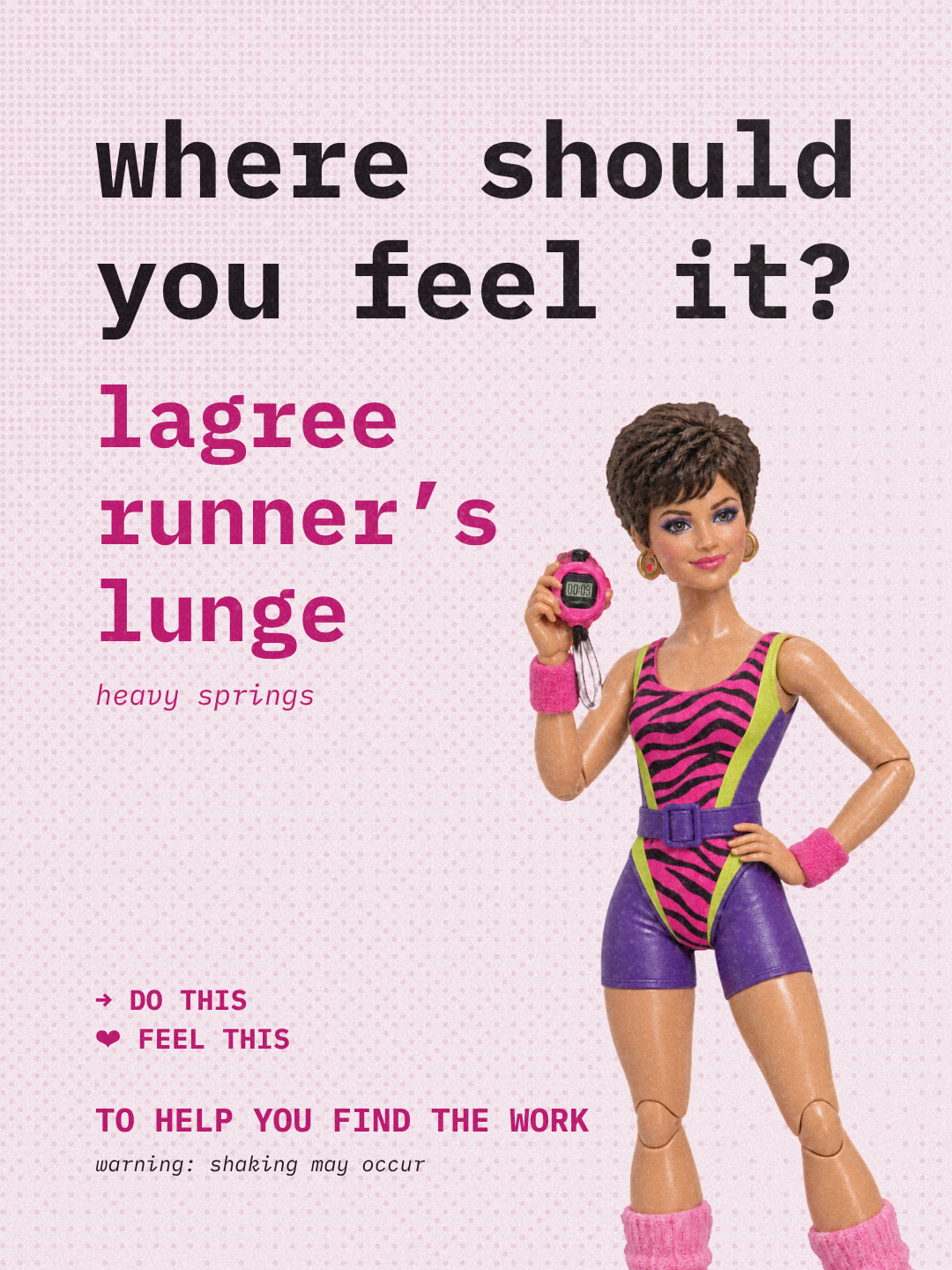
your guide to the setup, the cues, and finding the work in runner’s lunge. warning: shaking may occur.
runner's lunge is a heavy-spring lagree exercise that primarily challenges your front-leg glutes and hamstrings while your back leg controls the movement of the carriage.
the key is maintaining a static lunge position on the front platform while controlling the carriage in and out.
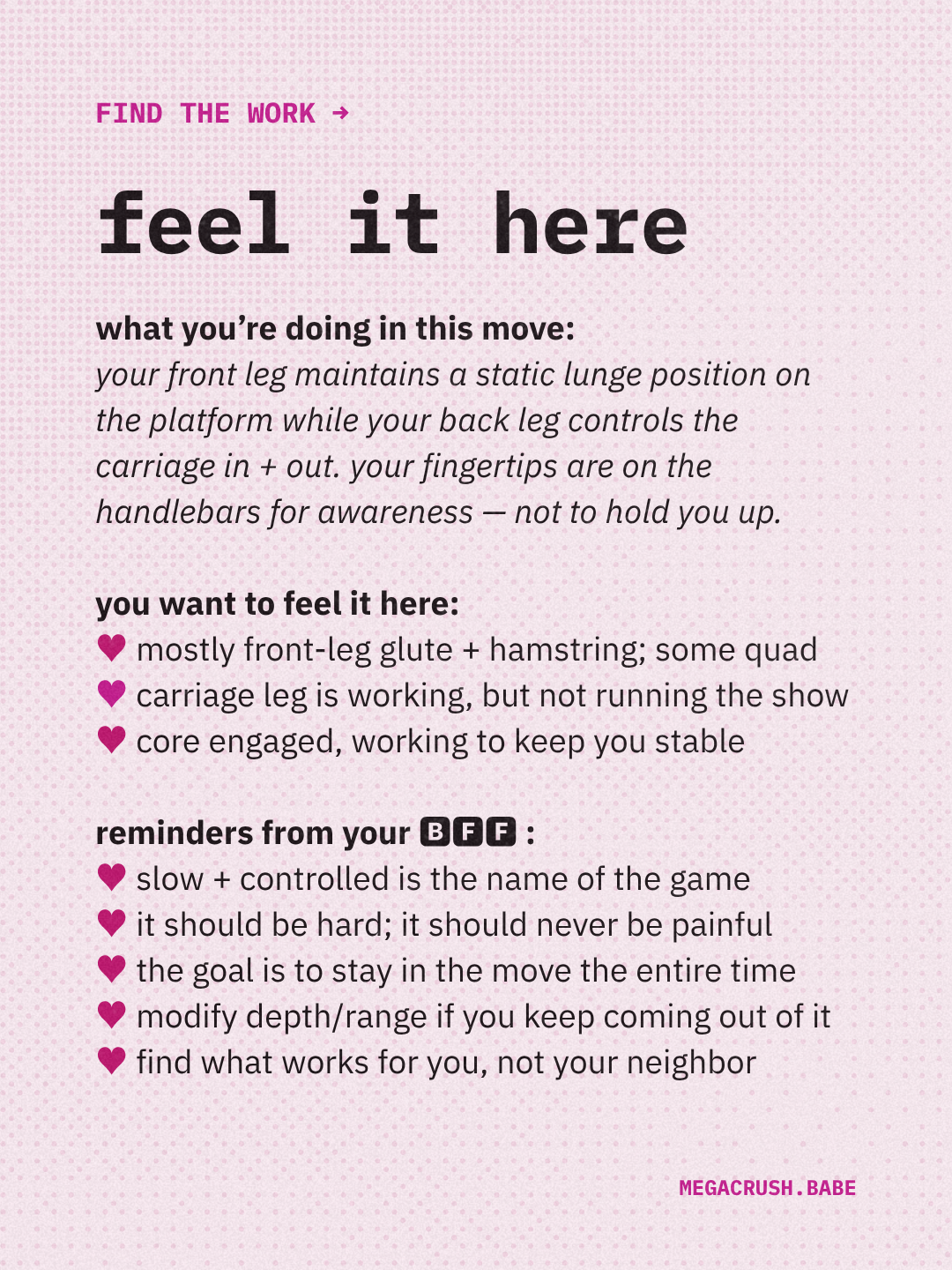
your front leg should be doing most of the work. your back leg is involved, but it shouldn't be running the show.
where should you feel it?
runner's lunge primarily targets the muscles of your front leg while challenging your balance and stability.
front-leg glutes + hamstrings: doing most of the work to maintain your lunge position.
front-leg quads: assisting with stability and holding your position.
back leg: controlling the carriage without taking over.
core: keeping your body stable throughout the movement.
your fingertips can rest lightly on the handlebars for awareness and balance, but they shouldn't be holding you up.
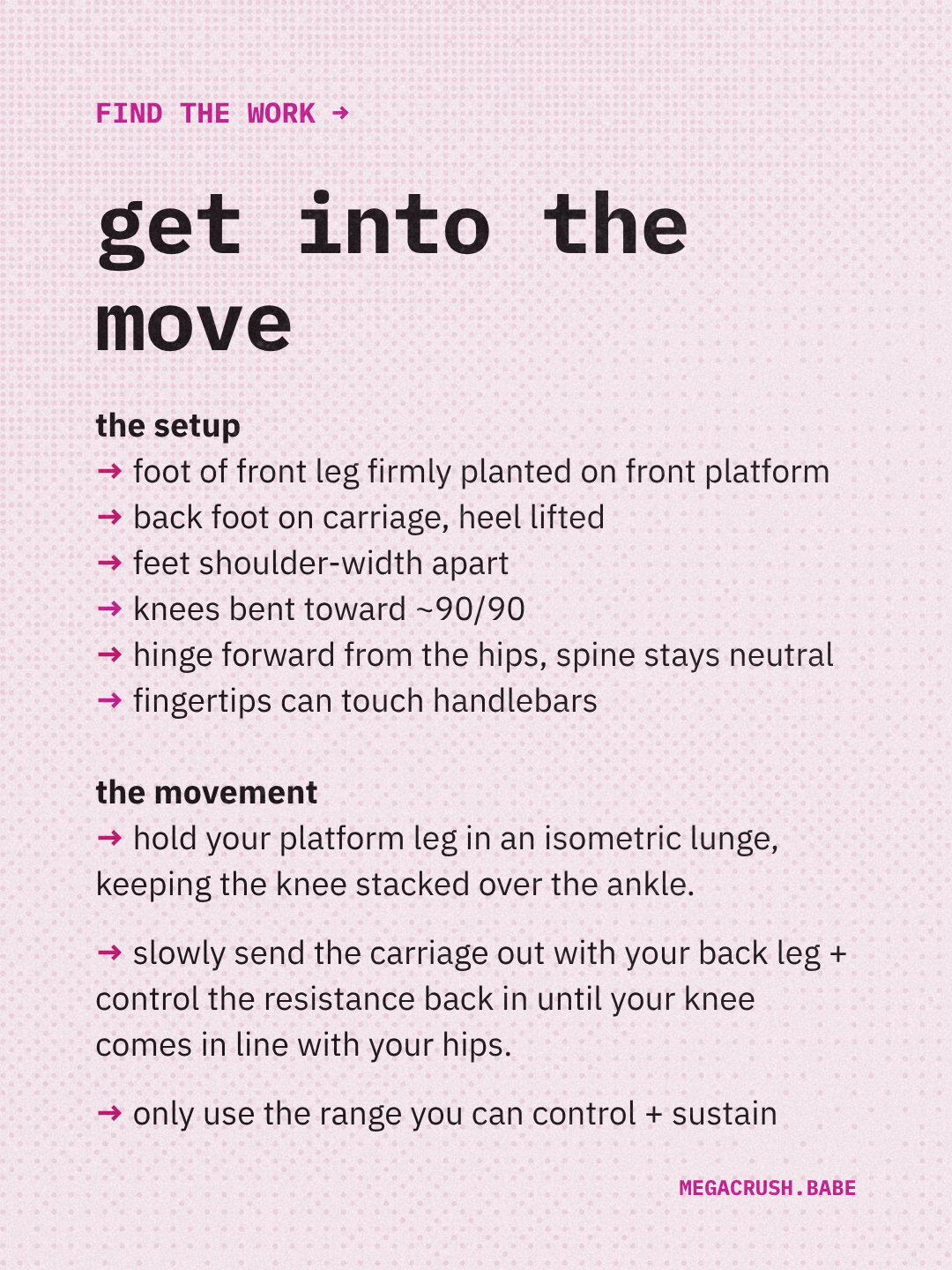
get into the move
the setup
plant your front foot firmly on the front platform.
position your back foot on the carriage with your heel lifted.
keep your feet approximately shoulder-width apart.
bend your knees toward a 90/90 position.
hinge forward from your hips while maintaining a neutral spine.
lightly touch the handlebars with your fingertips if needed.
the movement
hold your front leg in an isometric lunge, keeping your knee stacked over your ankle.
slowly send the carriage out with your back leg.
control the resistance as the carriage returns, bringing your back knee in line with your hips.
maintain your front-leg position throughout the movement.
only use a range of motion you can control and sustain.
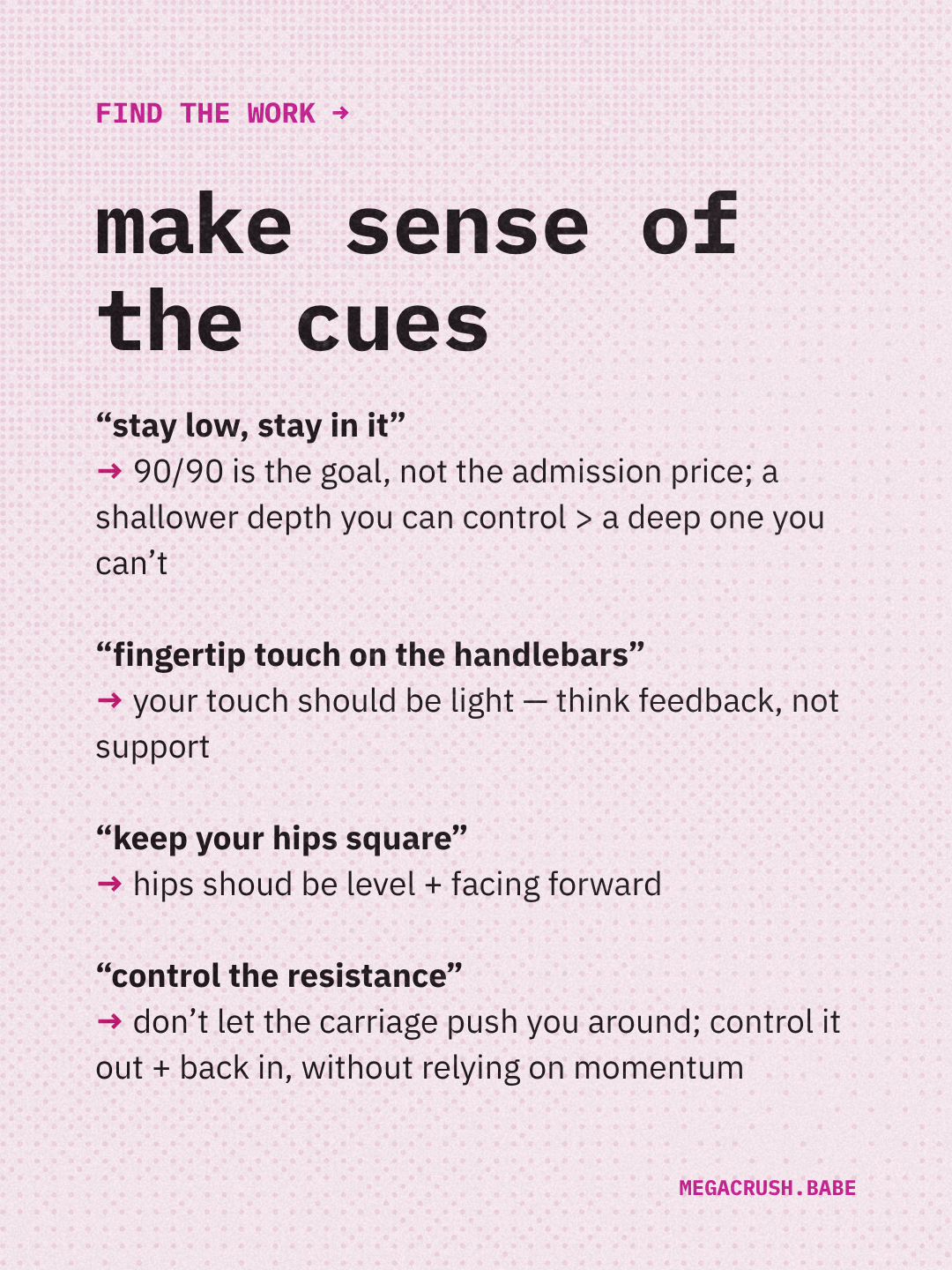
make sense of the cues
"stay low, stay in it"
90/90 is the goal, not the admission price. a shallower lunge you can maintain is more effective than a deeper position you have to keep coming out of.
"fingertip touch on the handlebars"
your touch should be light. think feedback, not support.
the handlebars can help you stay aware of your position, but you shouldn't be relying on them to hold your weight.
"keep your hips square"
your hips should remain level and facing forward throughout the movement.
avoid letting one hip drop or rotate open as the carriage moves.
"control the resistance"
don't let the carriage push you around.
control the movement both out and back in without relying on momentum.
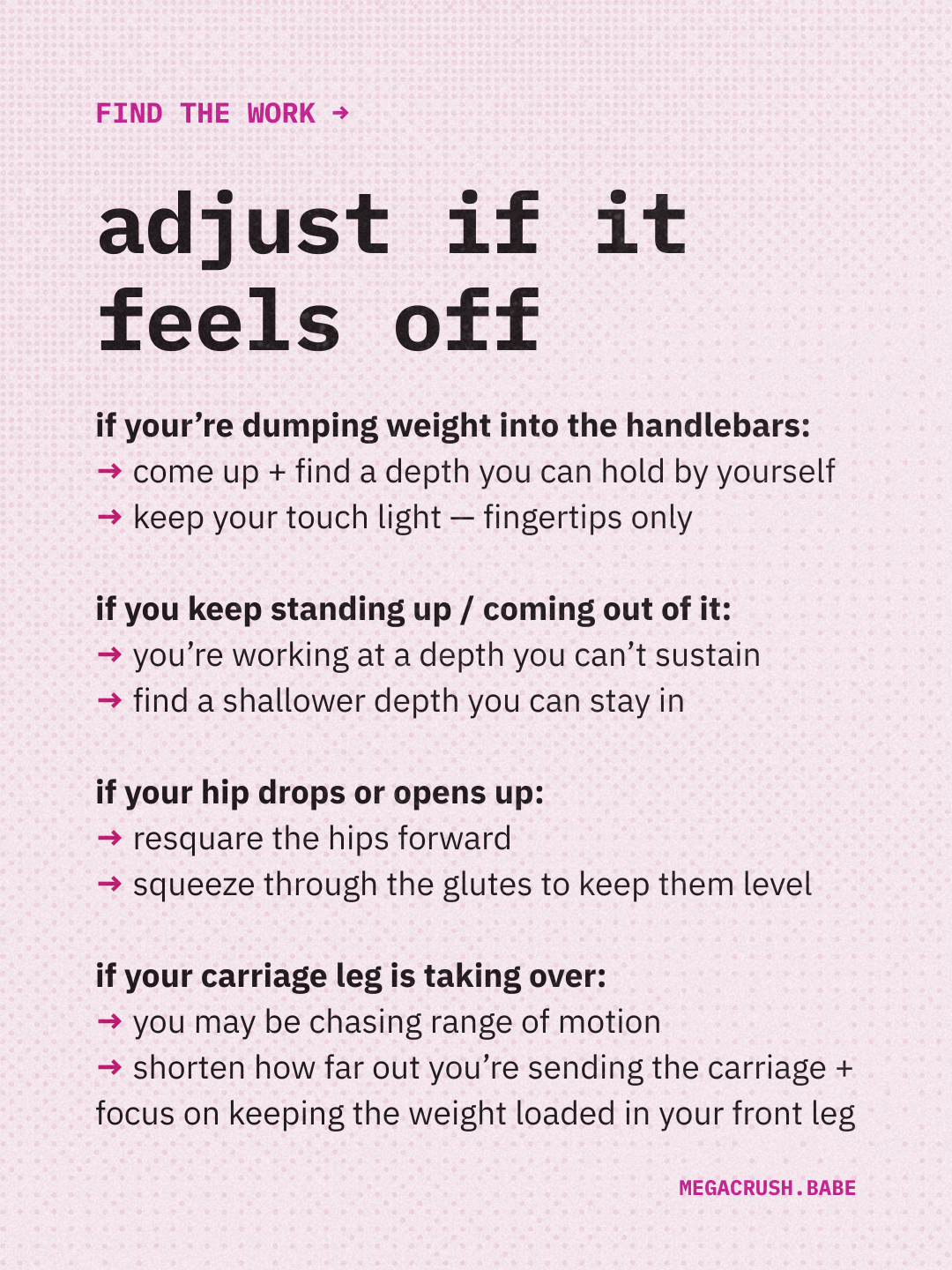
adjust if something feels off
if you're dumping weight into the handlebars:
come up slightly and find a lunge depth you can hold independently.
keep your touch light, using only your fingertips.
if you keep standing up or coming out of the lunge:
you're likely working at a depth you can't sustain.
find a shallower position you can maintain throughout the movement.
if your hip drops or opens up:
bring your hips back to a level, forward-facing position.
engage your glutes to help maintain alignment.
if your carriage leg is taking over:
you may be chasing too much range of motion.
shorten how far you're sending the carriage out.
focus on keeping the weight loaded into your front leg.
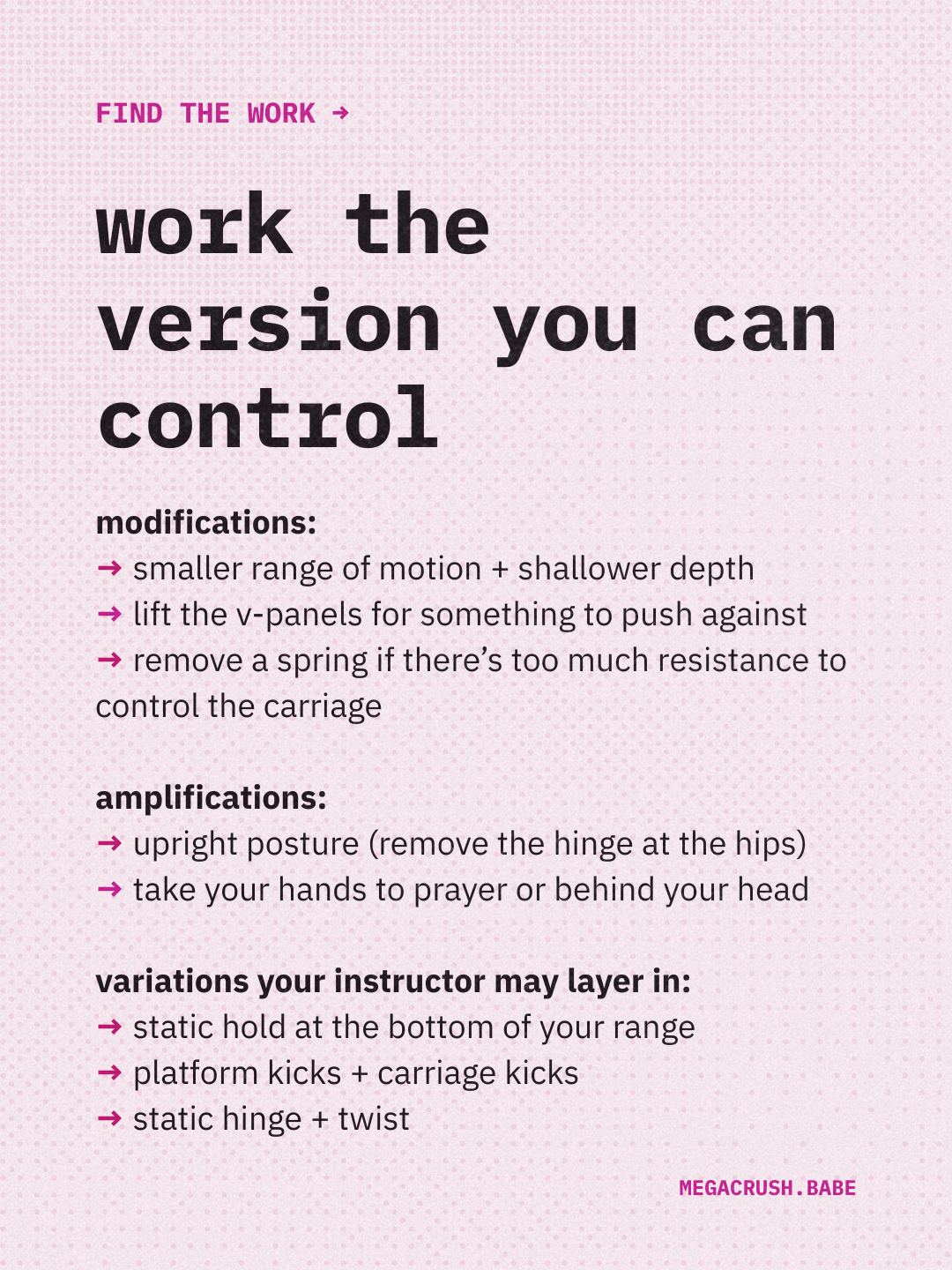
work the version you can control
runner's lunge can be adjusted to match your strength, balance, and ability to sustain the position.
modifications
smaller range + shallower depth: reduce the movement to something you can control without coming out of the lunge.
v-panels: lift the v-panels to give yourself something to push against for additional support.
spring adjustment: if there's too much resistance to control the carriage, ask your instructor about removing a spring.
amplifications
upright posture: remove the forward hinge at your hips.
hands off the handlebars: bring your hands to prayer position or behind your head.
variations your instructor may layer in
static hold at the bottom of your range.
platform kicks + carriage kicks.
static hinge + twist.
reminders from your bff
slow + controlled is the name of the game.
it should be hard; it should never be painful.
the goal is to stay in the move the entire time.
modify your depth or range if you keep coming out of it.
find what works for you, not your neighbor.
the goal isn't to get as low as possible or move the carriage as far as you can. it's to find a position where you can maintain the work. ♡