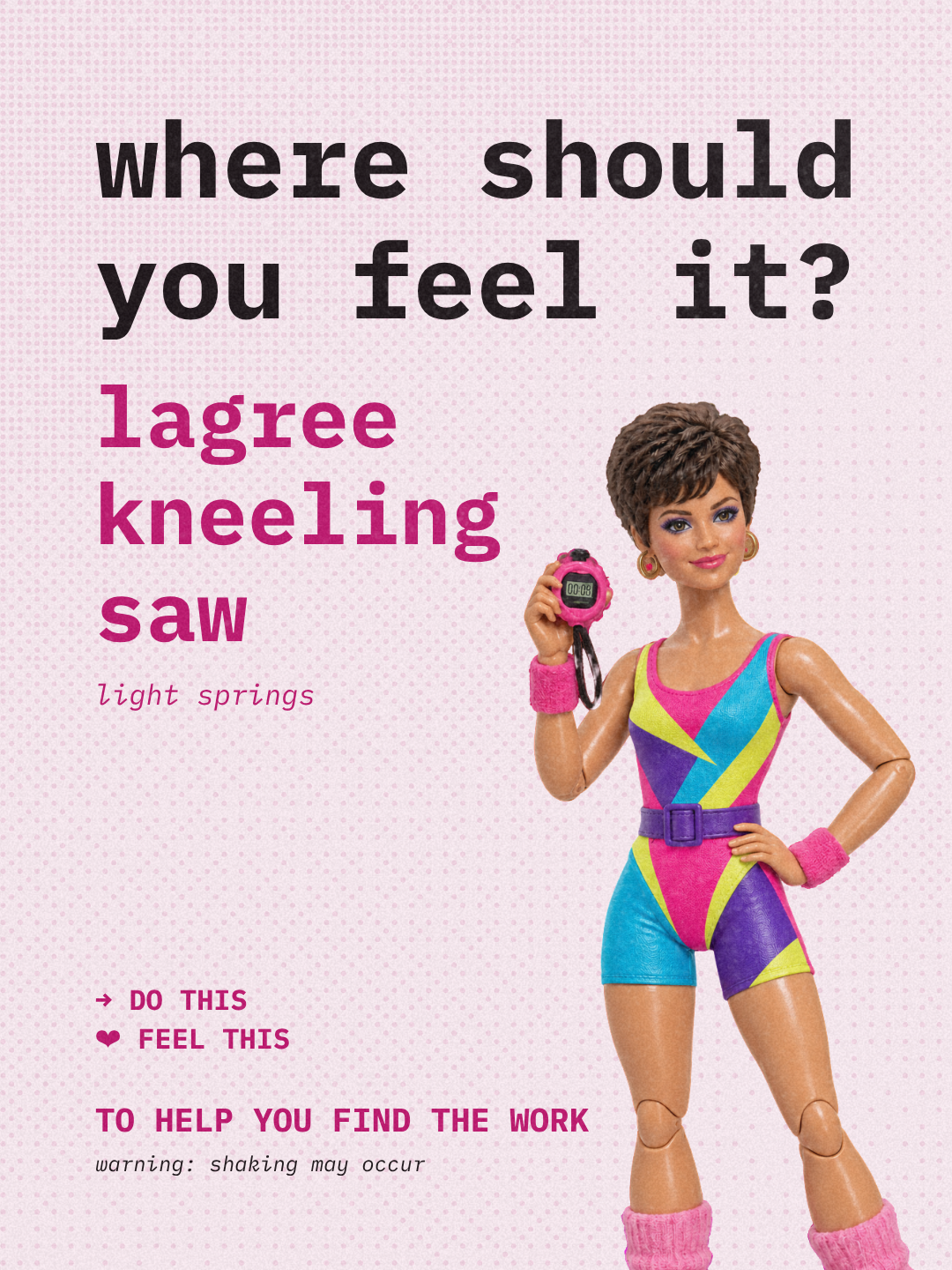
your guide to the setup, the cues, and finding the work in kneeling saw. warning: shaking may occur.
the most important thing to understand about kneeling saw is that saw isn't a crunch.
your hips stay still while your upper body controls the push and pull of the carriage. your core works throughout the movement to stabilize your body and maintain alignment.
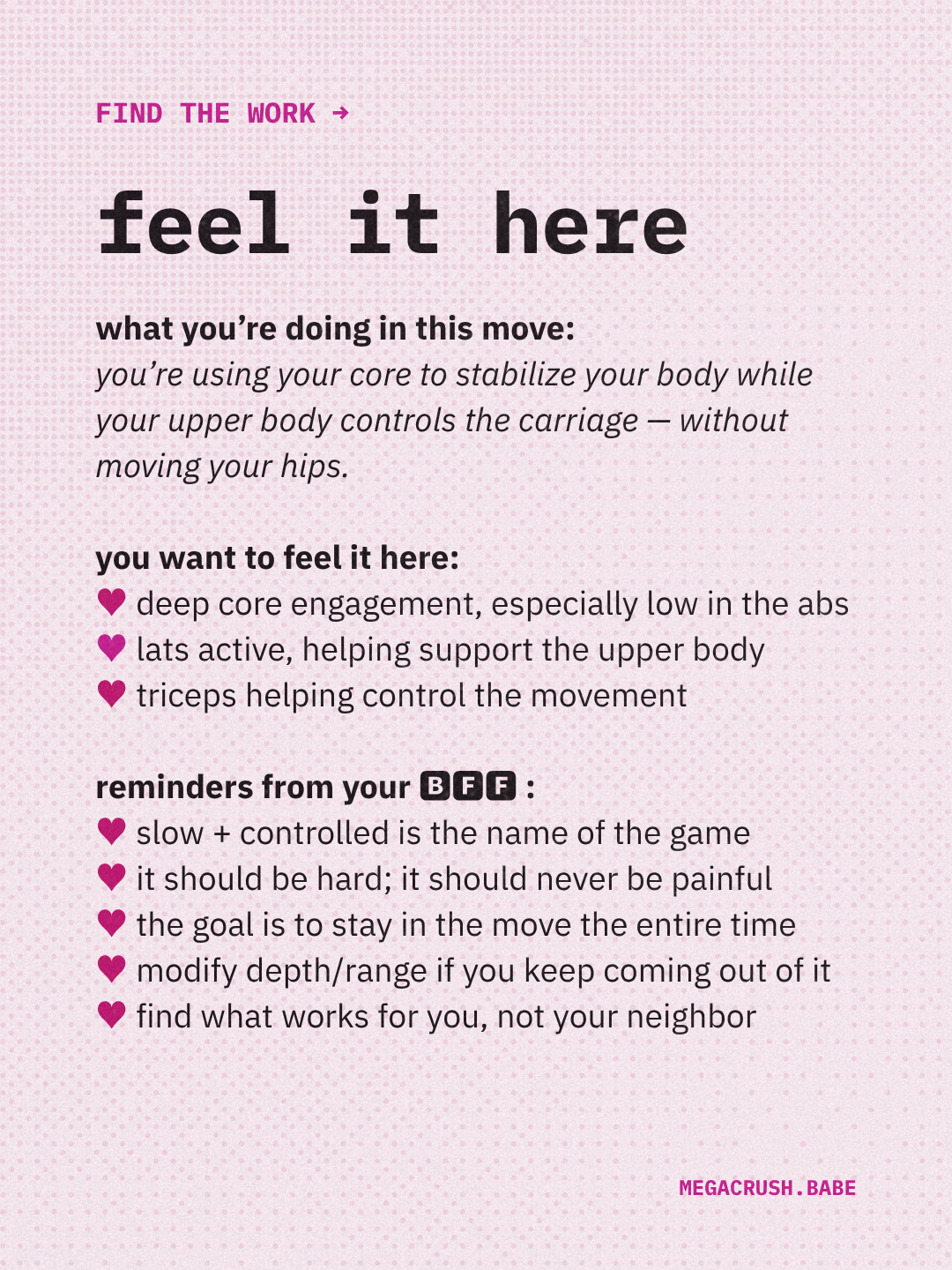
where should you feel it?
kneeling saw primarily targets your core, with support from your upper body.
deep abdominals: stabilize your torso throughout the movement.
lats: support your upper body and help control the carriage.
shoulders + triceps: assist with the push and pull.
you should feel your core working, particularly around the lower abdominal area where your jeans button or zip.
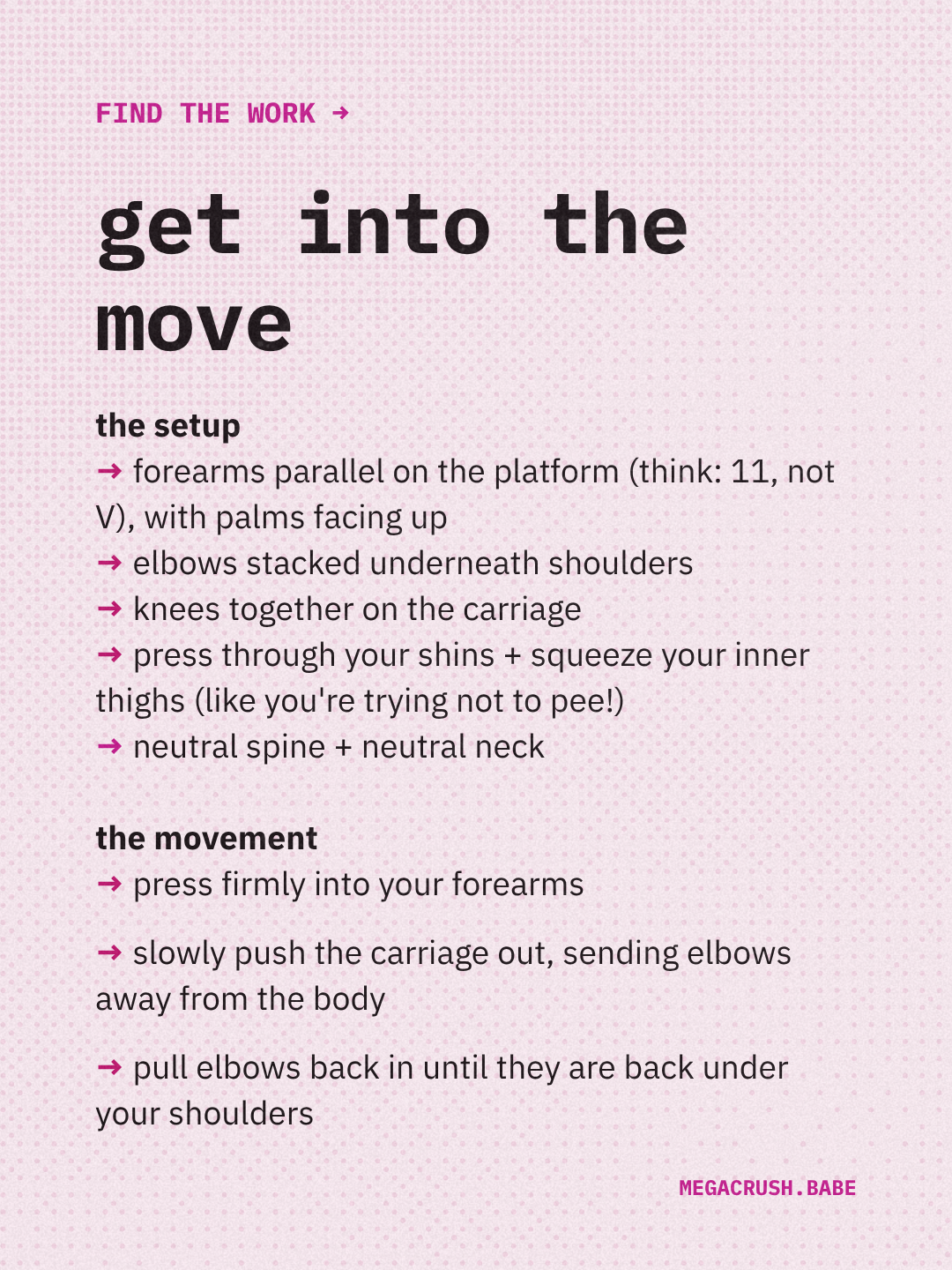
get into the move
the setup
use the light spring setting directed by your instructor.
face the front of the megaformer with your knees on the carriage and forearms on the front platform.
position your forearms parallel, like the number 11 rather than a V.
palms up adds a stability challenge; palms down provides more support.
start with your elbows stacked underneath your shoulders.
press firmly through your shins and squeeze your inner thighs together (like you're trying not to pee!).
maintain a neutral spine and neck.
the movement
slowly push the carriage out, sending your elbows forward toward your chin and, as mobility allows, toward the crown of your head.
keep your hips stable without bending or extending at the hip joints.
bring your elbows back underneath your shoulders with control.
avoid using your knees to pull the carriage inward.
the movement doesn't have to be big. only extend as far as you can while maintaining control and alignment.
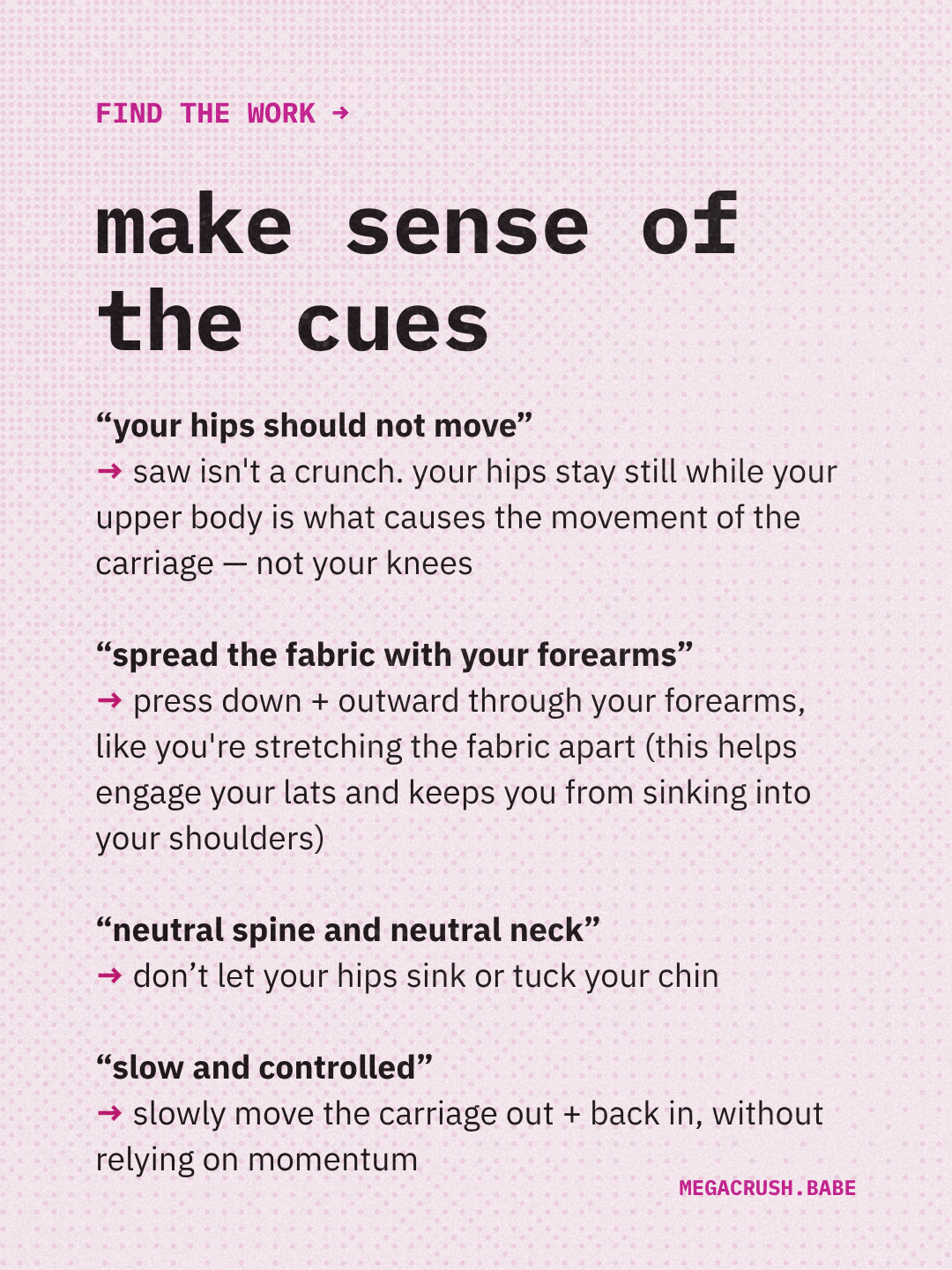
make sense of the cues
"your hips should not move"
saw isn't a crunch. your upper body controls the movement while your core stabilizes your hips and torso. don't initiate the return by pulling with your knees.
"spread the fabric with your forearms"
press down and outward through your forearms as though you're spreading the fabric of the platform apart. this helps engage your lats and prevents you from sinking into your shoulders.
"keep a neutral spine"
maintain your alignment throughout the movement. avoid letting your hips sink or arching excessively through your lower back.
"keep a neutral neck"
keep your neck aligned with your spine rather than looking down toward your abs or tucking your chin.
"it doesn't have to be big"
your range of motion depends on your shoulder mobility and your ability to maintain control. reaching your elbows toward your chin may be enough. you don't need to force a larger movement.
adjust if something feels off
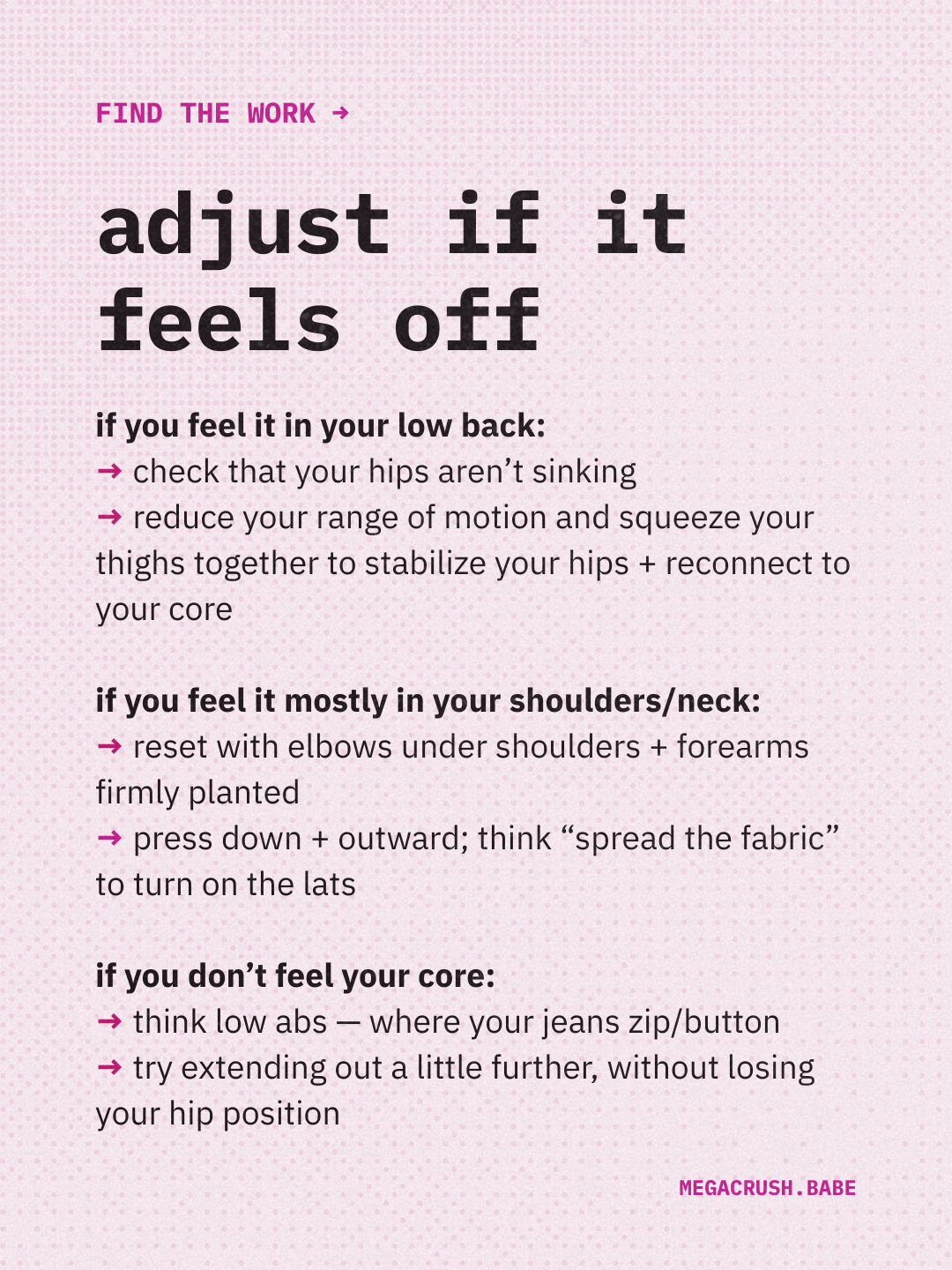
if you're feeling it in your lower back:
check that your hips aren't sinking.
shorten your range of motion.
engage your core to maintain alignment.
if you're feeling it mostly in your shoulders or neck:
reset with your elbows underneath your shoulders.
press firmly through your forearms.
think about spreading the fabric apart to engage your lats.
maintain a neutral neck.
if you're not feeling your core:
extend just far enough to find engagement around the area where your jeans button or zip.
keep your hips stable throughout the movement.
focus on control rather than how far the carriage moves.
if you're using your knees to bring the carriage in:
shorten your range of motion.
focus on initiating the movement through your upper body.
consider reverse saw to help learn the movement pattern.
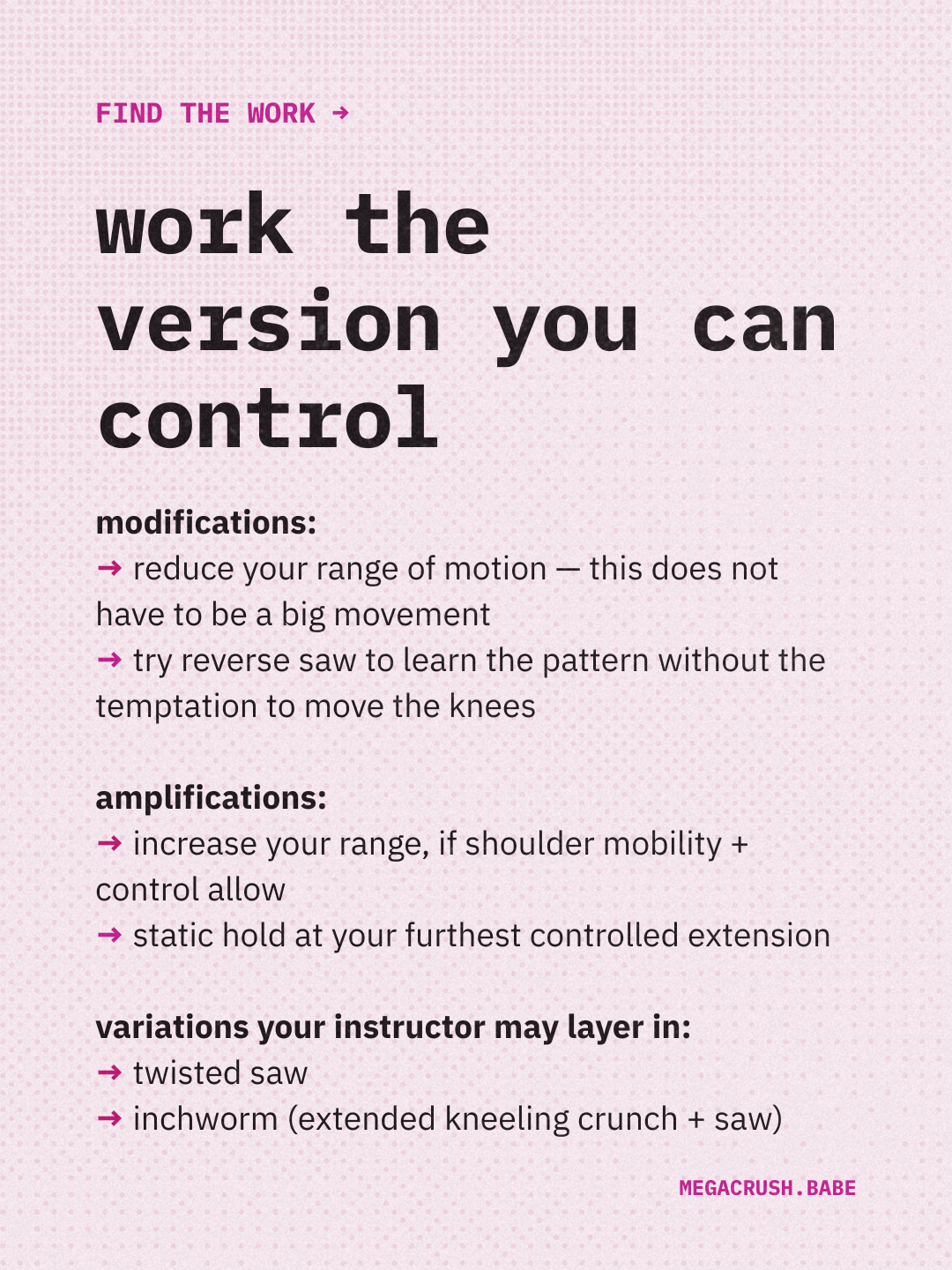
work the version you can control
modifications + alternatives
smaller range: reduce how far you extend while maintaining your alignment.
reverse saw: face the back of the machine with your knees on the stationary front platform and forearms on the moving carriage. with your knees stationary, you can practice controlling the movement without pulling the carriage in with your knees.
reverse saw isn't necessarily easier, but it can be a useful alternative for learning the correct movement pattern.
amplifications
increase your range of motion if your shoulder mobility and control allow.
add an isometric hold at your furthest controlled extension.
slow the movement while maintaining stability.
reminders from your bff
you don't have to move the carriage as far as possible to get more out of saw.
focus on keeping your hips stable, your core engaged, and your upper body supported throughout the movement.
the goal is to find the work, not force a bigger range of motion. ♡