things you hear in lagree like you're supposed to know what they mean.
if you've ever heard your instructor call out "giant reverse" and wondered what exactly you're supposed to do with that information, here's your cheat sheet.
in lagree, giant and reverse tell you where to position yourself on the megaformer and which direction to face.
once you understand the terminology, those exercise names start making a lot more sense.
first, let's talk about front + back
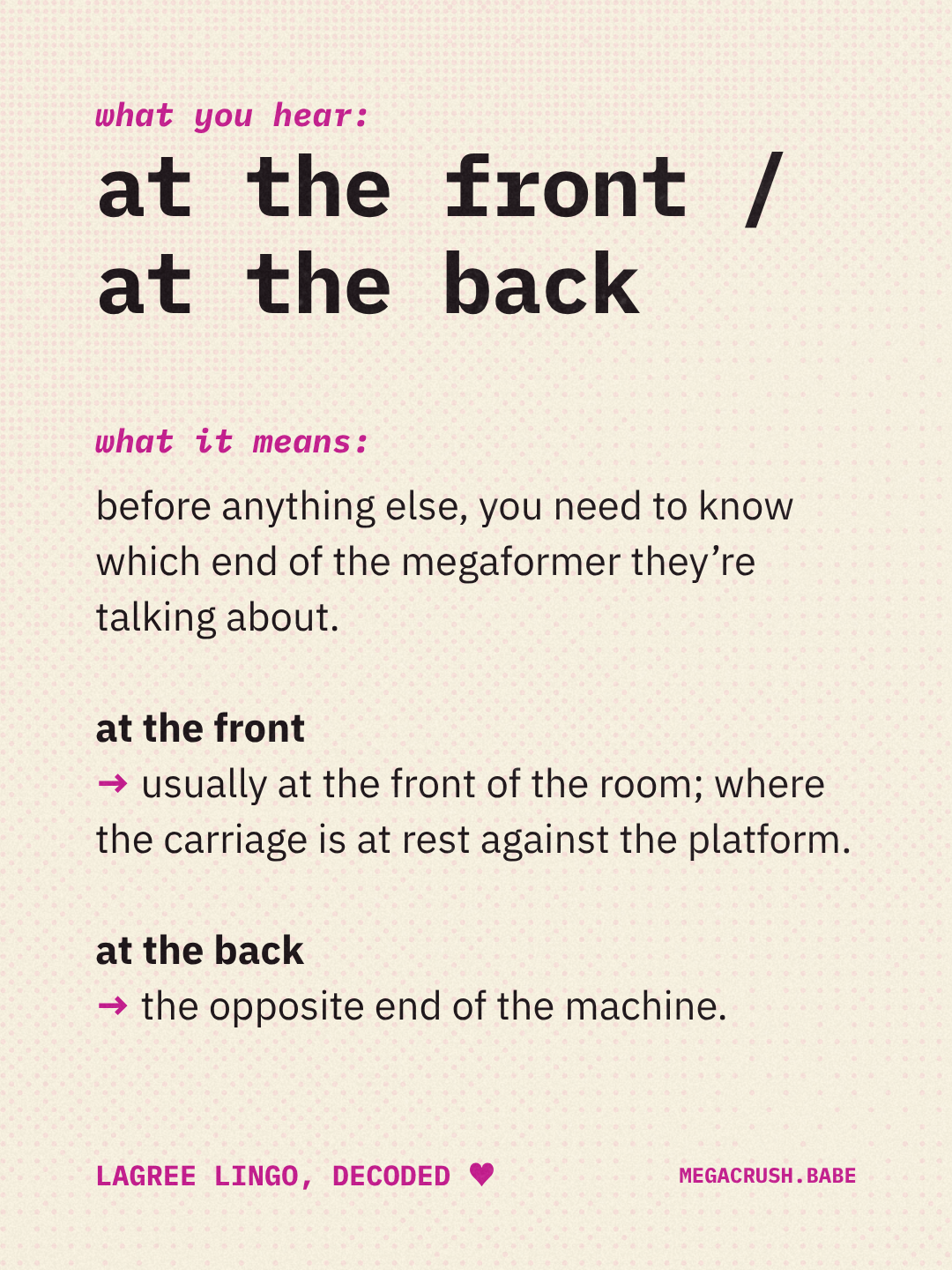
before anything else, you need to know which end of the megaformer you're talking about.
at the front
usually at the front of the room, where the carriage is positioned at the start against the platform.
at the back
the opposite end of the machine.
your instructor may use these terms to help you get into position before a movement.
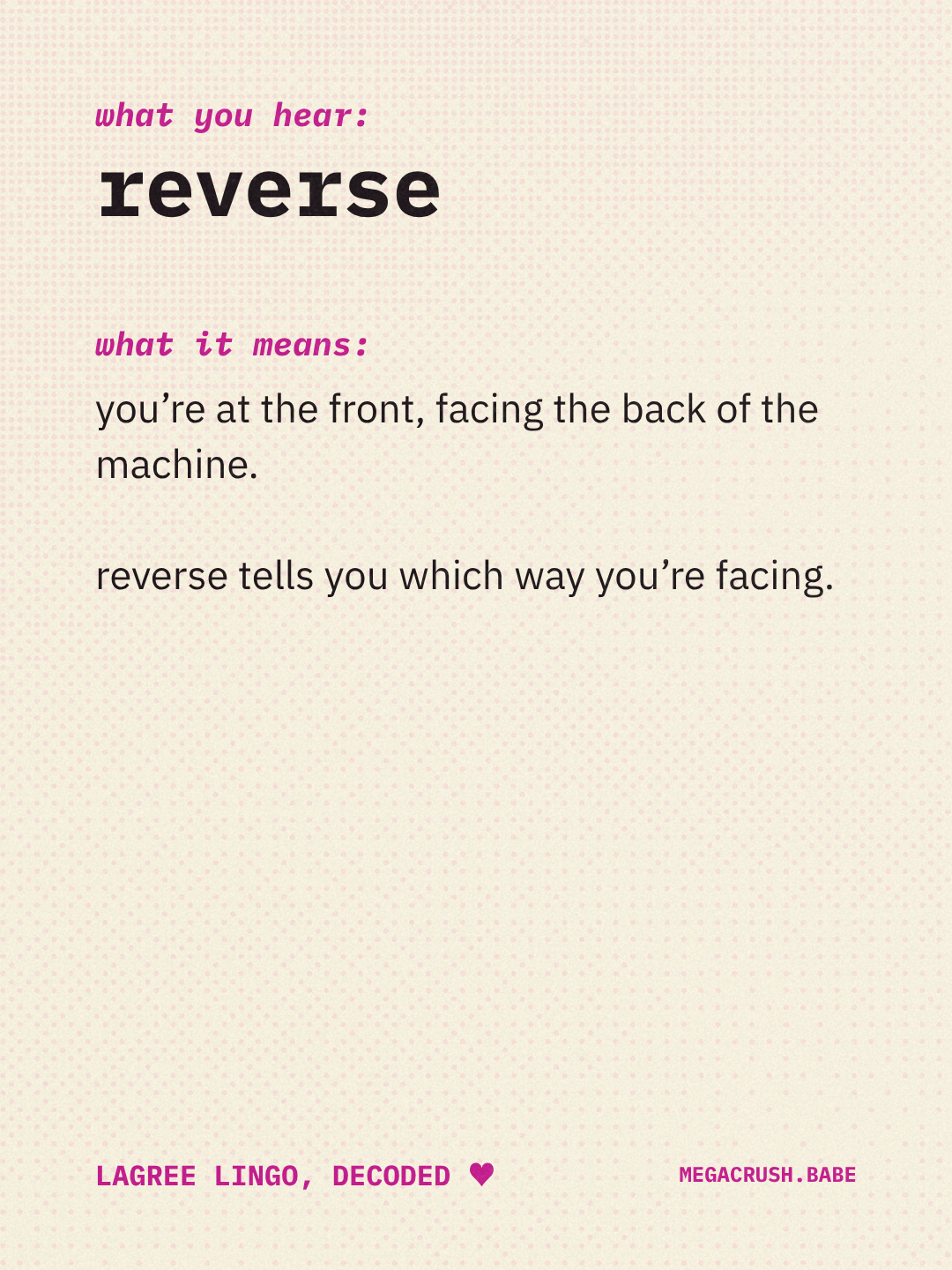
what does reverse mean in lagree?
reverse tells you which way you're facing.
when an exercise includes "reverse," you're facing the back of the megaformer.
it doesn't necessarily mean the carriage moves backward or that you're doing the exercise in reverse.
it's about your orientation on the machine.
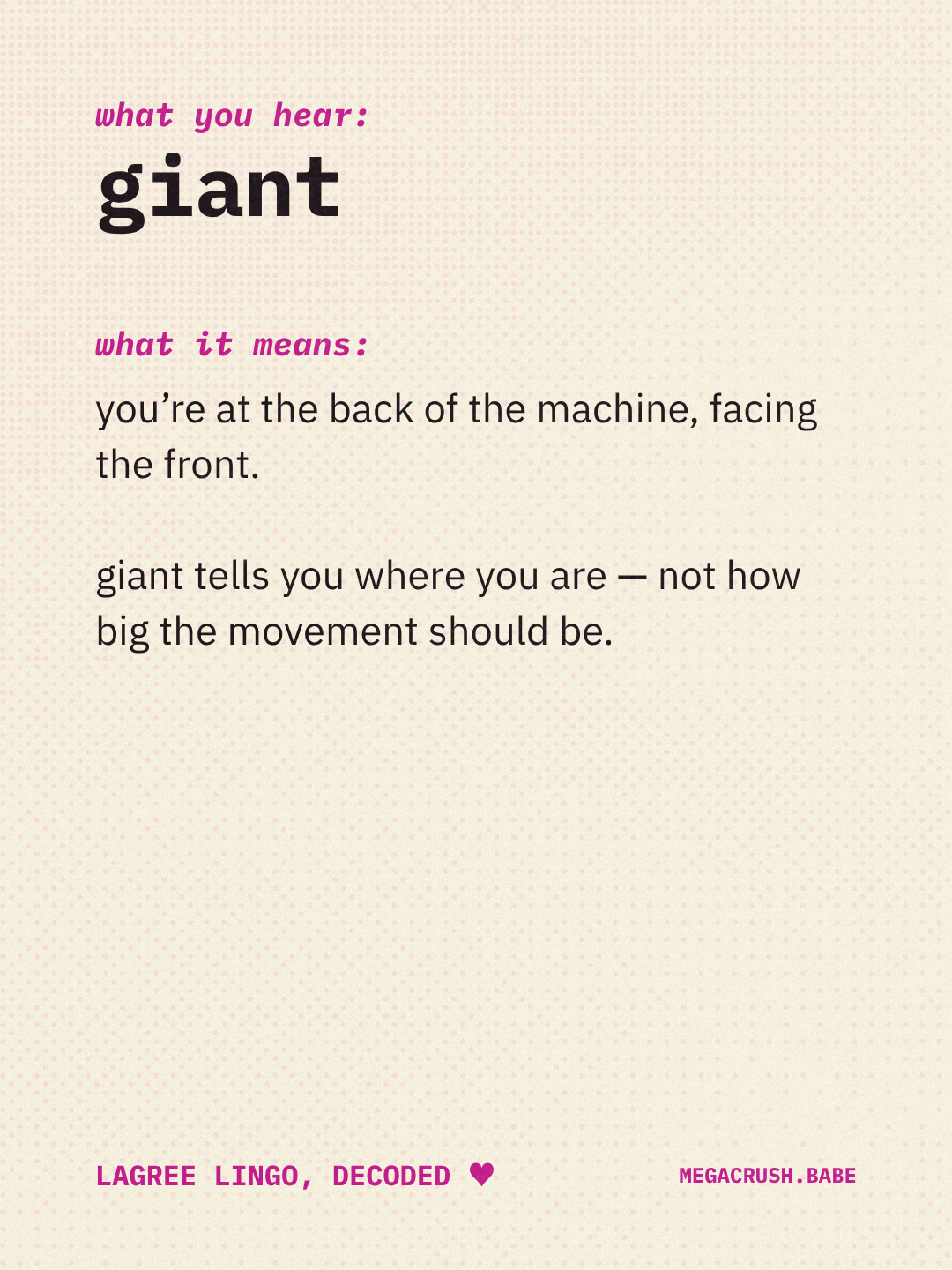
what does giant mean in lagree?
giant tells you where you are on the machine.
when you hear "giant," you're positioned at the back of the megaformer, facing the front.
and no, giant doesn't mean the movement should be bigger.
it's describing your location, not your range of motion.
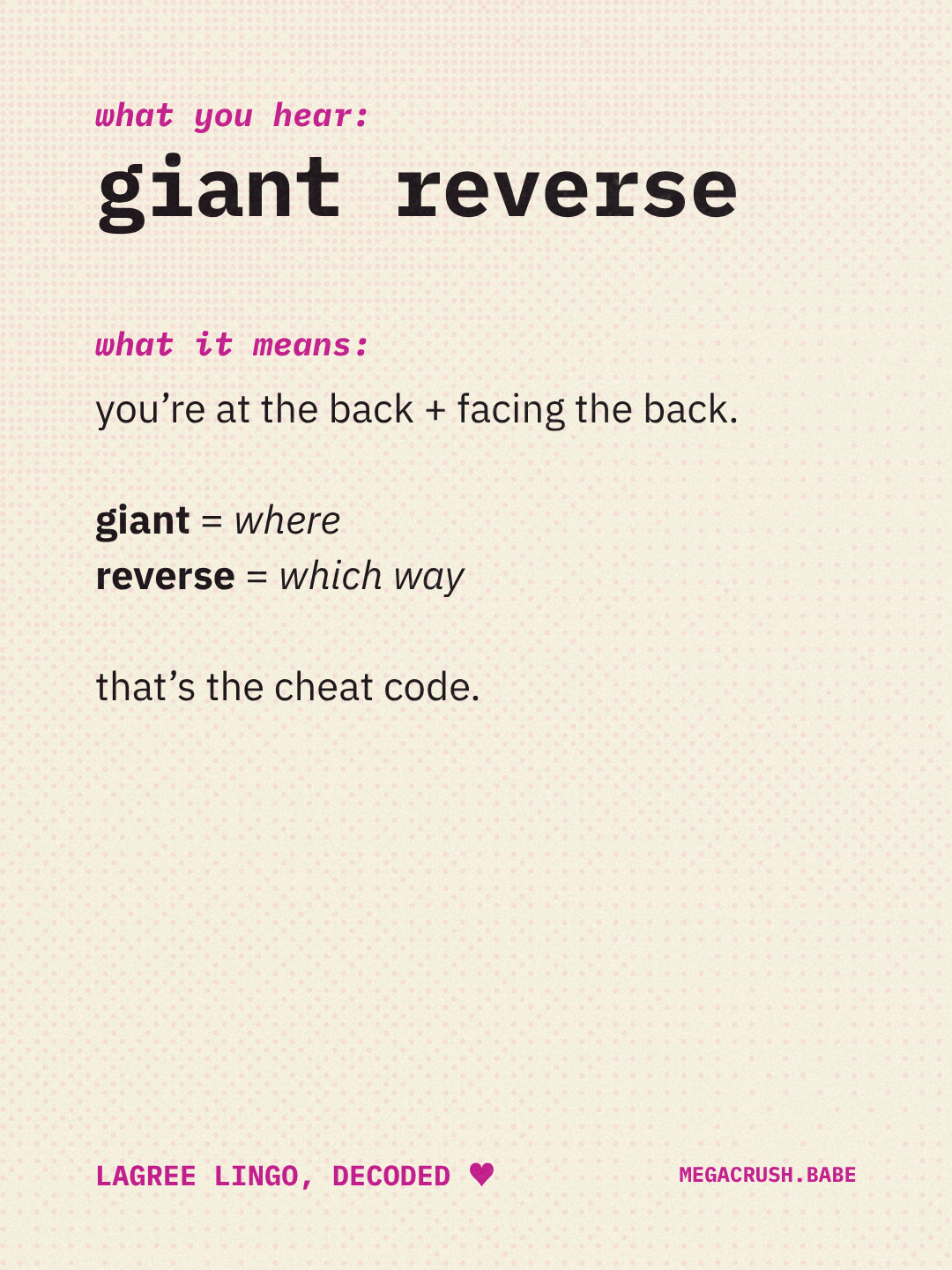
what about giant reverse?
now we're combining the two.
giant = where you are.
reverse = which way you're facing.
so when your instructor says "giant reverse," you're at the back of the megaformer, facing the back.
that's the cheat code.
let's put it into practice: wheelbarrow
wheelbarrow is a good example of how these terms work together.
the movement is focused on controlling the carriage through your upper body while keeping your hips and knees stable.
here's how the different versions are positioned.
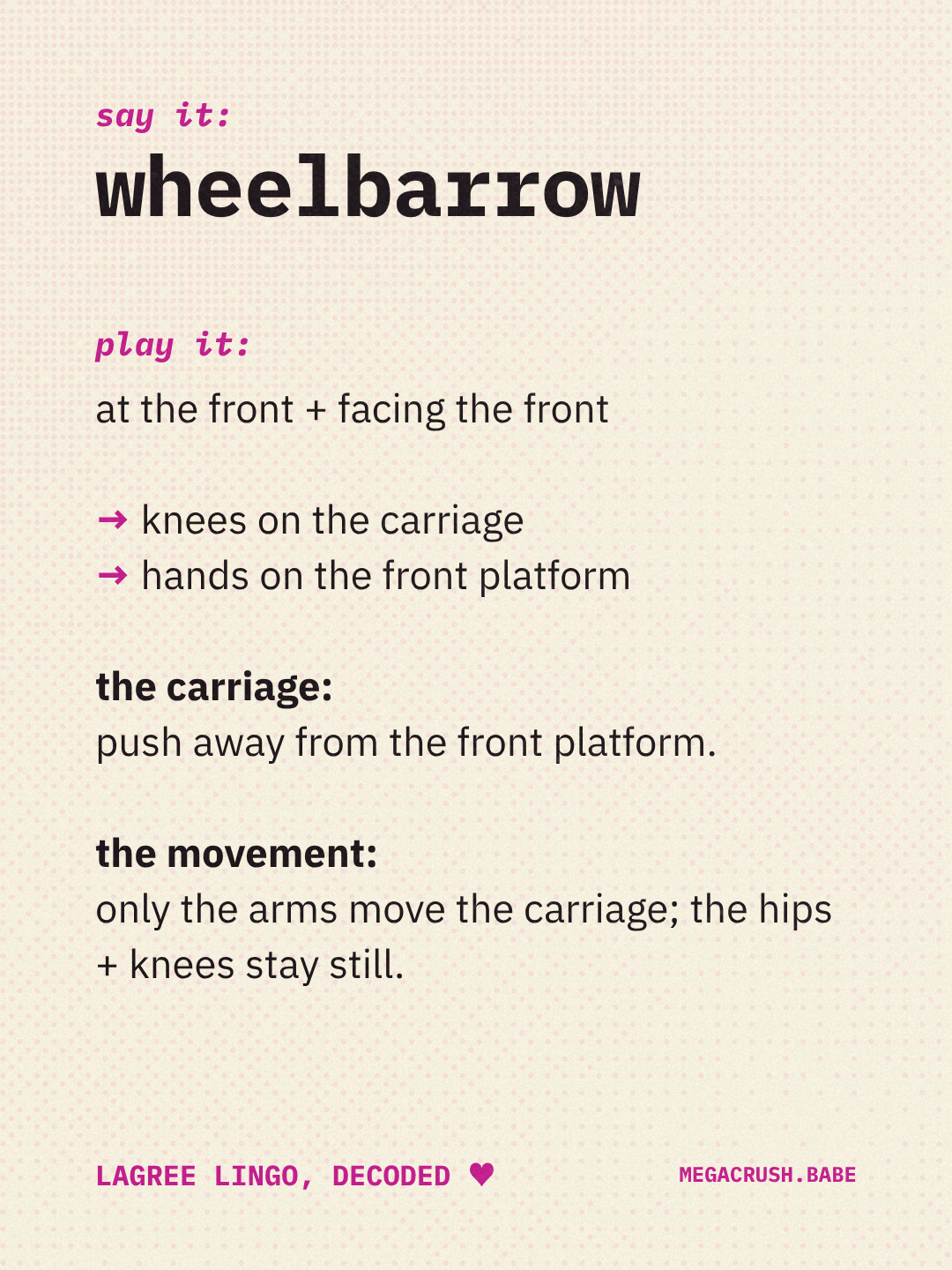
wheelbarrow
where: at the front, facing the front
knees on the carriage
hands on the front platform
push the carriage away from the front platform
the movement comes from your upper body while your hips and knees stay stable.
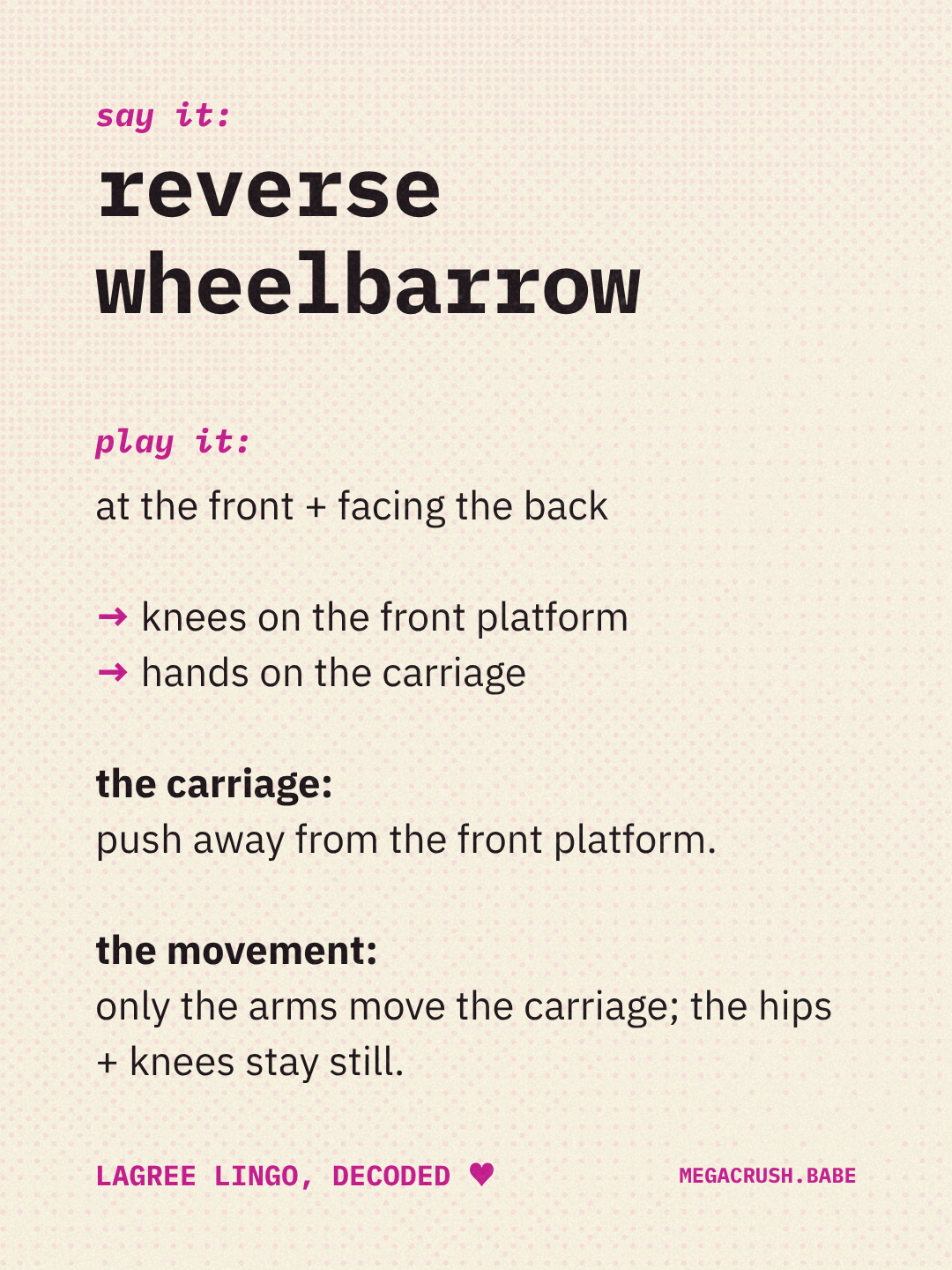
reverse wheelbarrow
where: at the front, facing the back
knees on the front platform
hands on the carriage
push the carriage away from the front platform
your lower body remains stationary while your upper body controls the carriage.
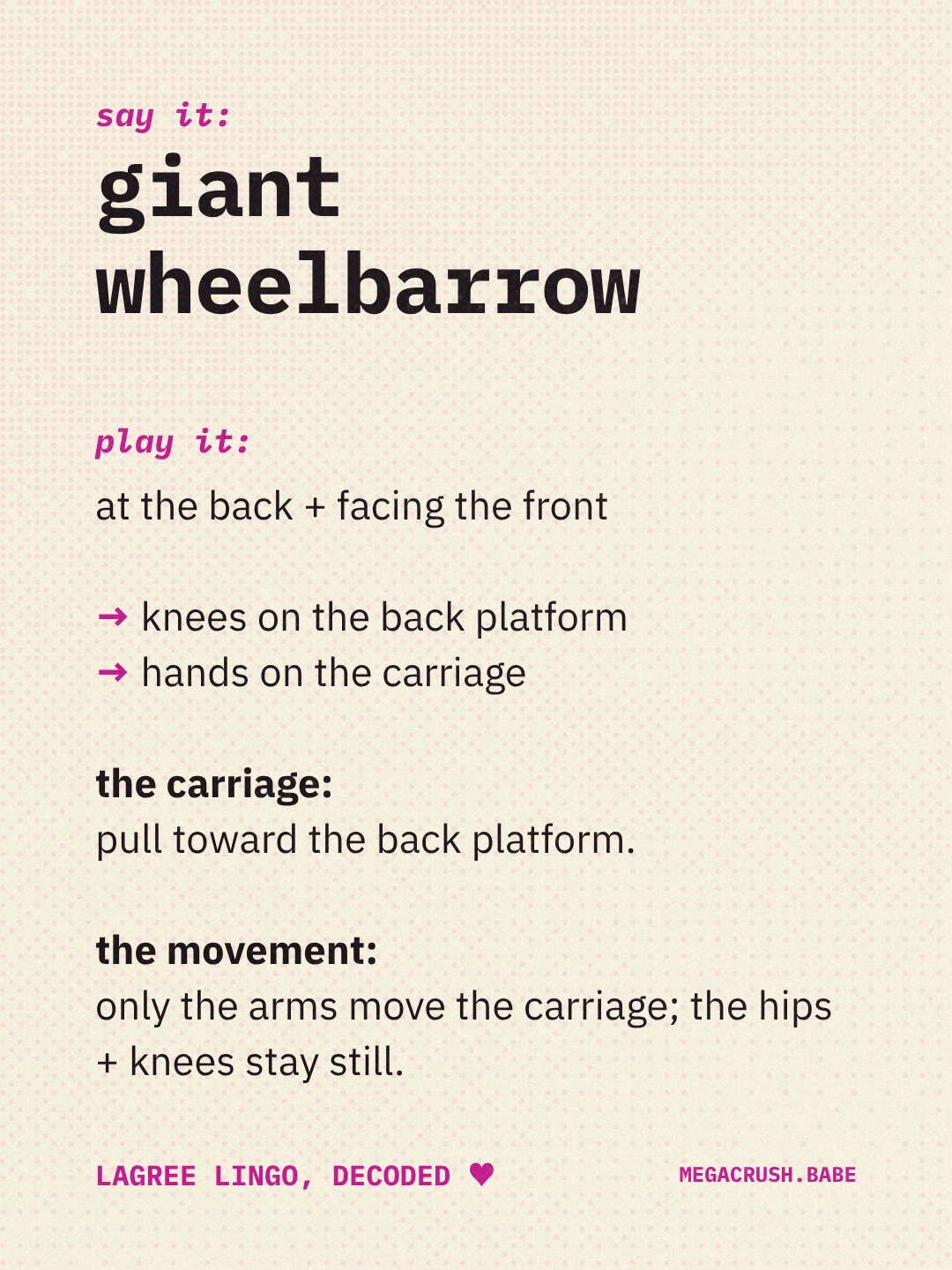
giant wheelbarrow
where: at the back, facing the front
knees on the back platform
hands on the carriage
pull the carriage toward the back platform
again, the movement comes from your upper body while your hips and knees stay stable.
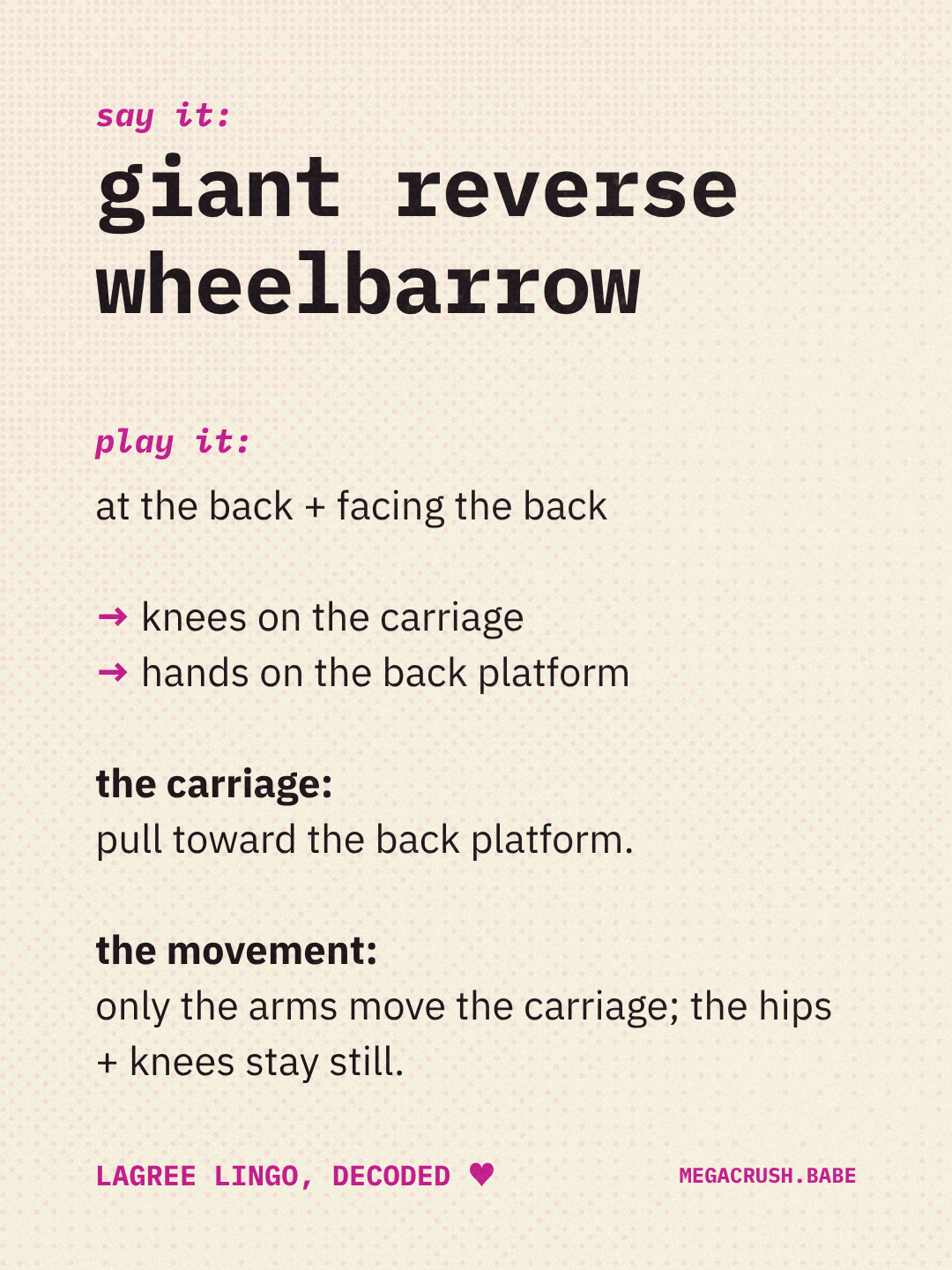
giant reverse wheelbarrow
where: at the back, facing the back
knees on the carriage
hands on the back platform
pull the carriage toward the back platform
the same upper-body control applies, but your position and direction have changed.
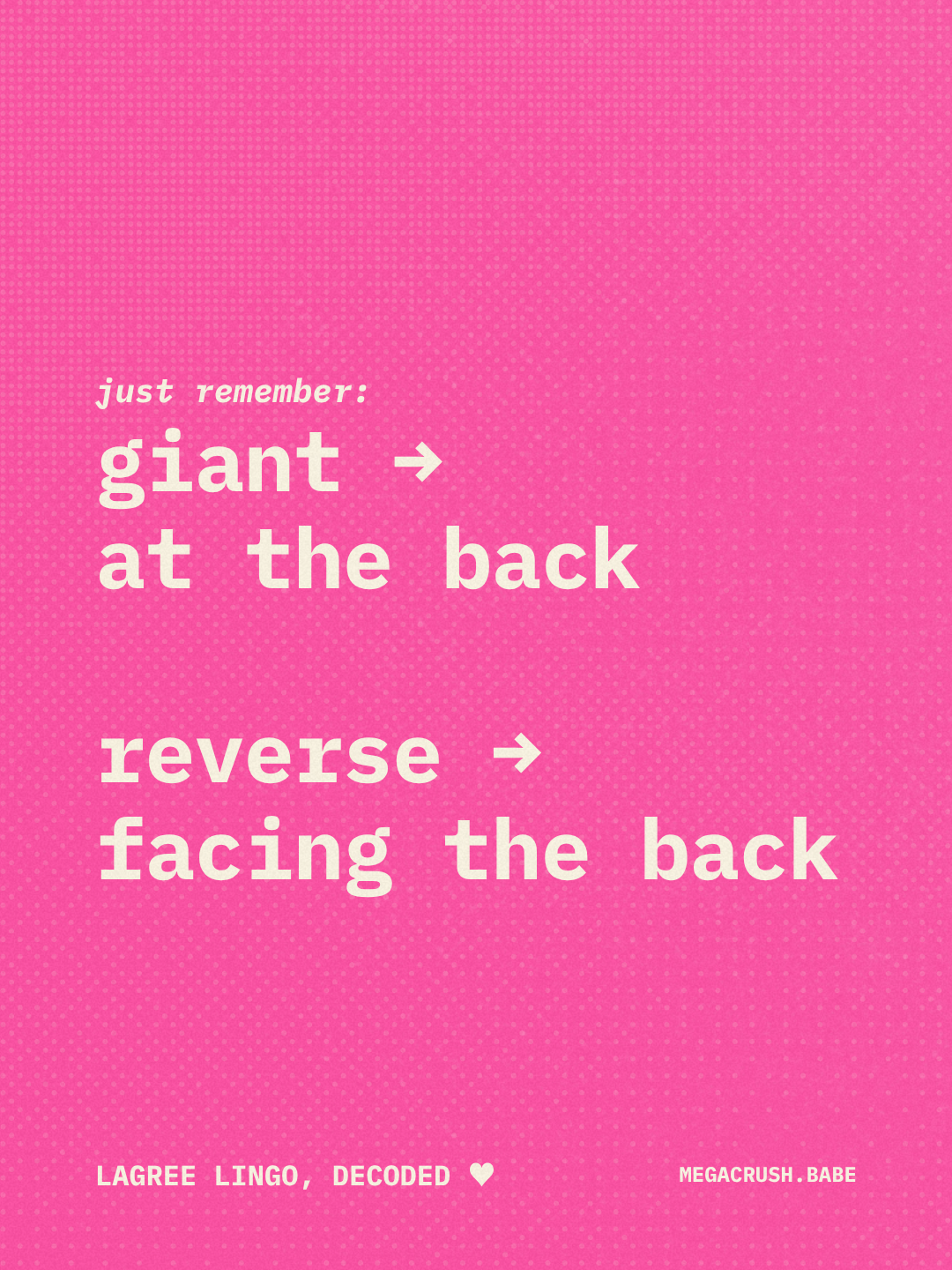
the easiest way to remember
giant → at the back
reverse → facing the back
once you know those two things, it's much easier to make sense of where your instructor wants you to go.
and remember: giant doesn't mean bigger, and reverse doesn't mean you're doing the movement backward.
it's just lagree lingo. ♡