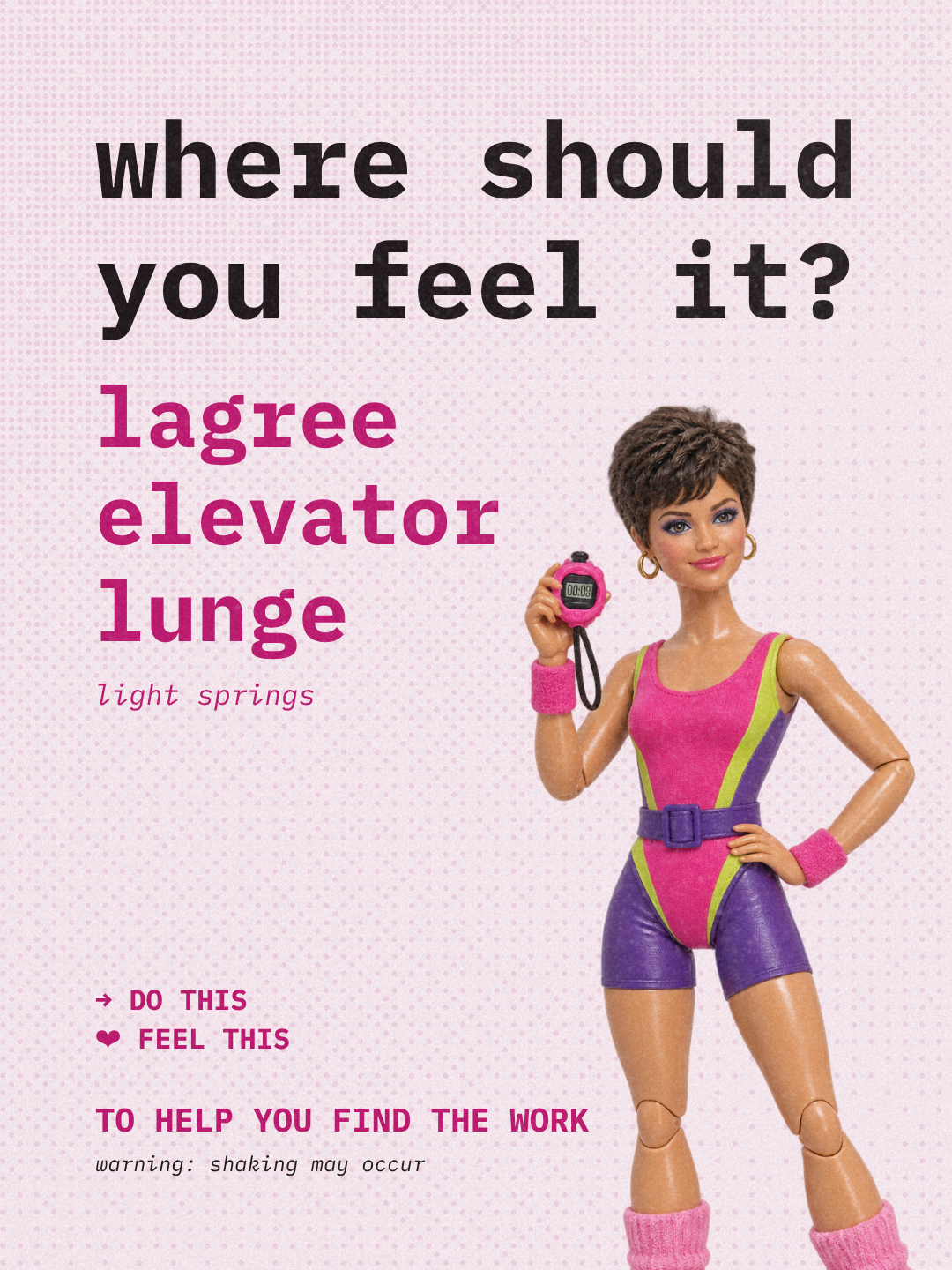
your guide to the setup, the cues, and finding the work in elevator lunge. warning: shaking may occur.
elevator lunge looks pretty straightforward. lower straight down, drive back up, repeat.
easy enough, right?
well, this is lagree. and somehow moving a few inches at a glacial pace can make your legs question every decision you've ever made.
the trick isn't just getting through the move. it's understanding what you're supposed to feel, why you're feeling it, and how to make adjustments when something isn't clicking.
so let's find the work. ♡
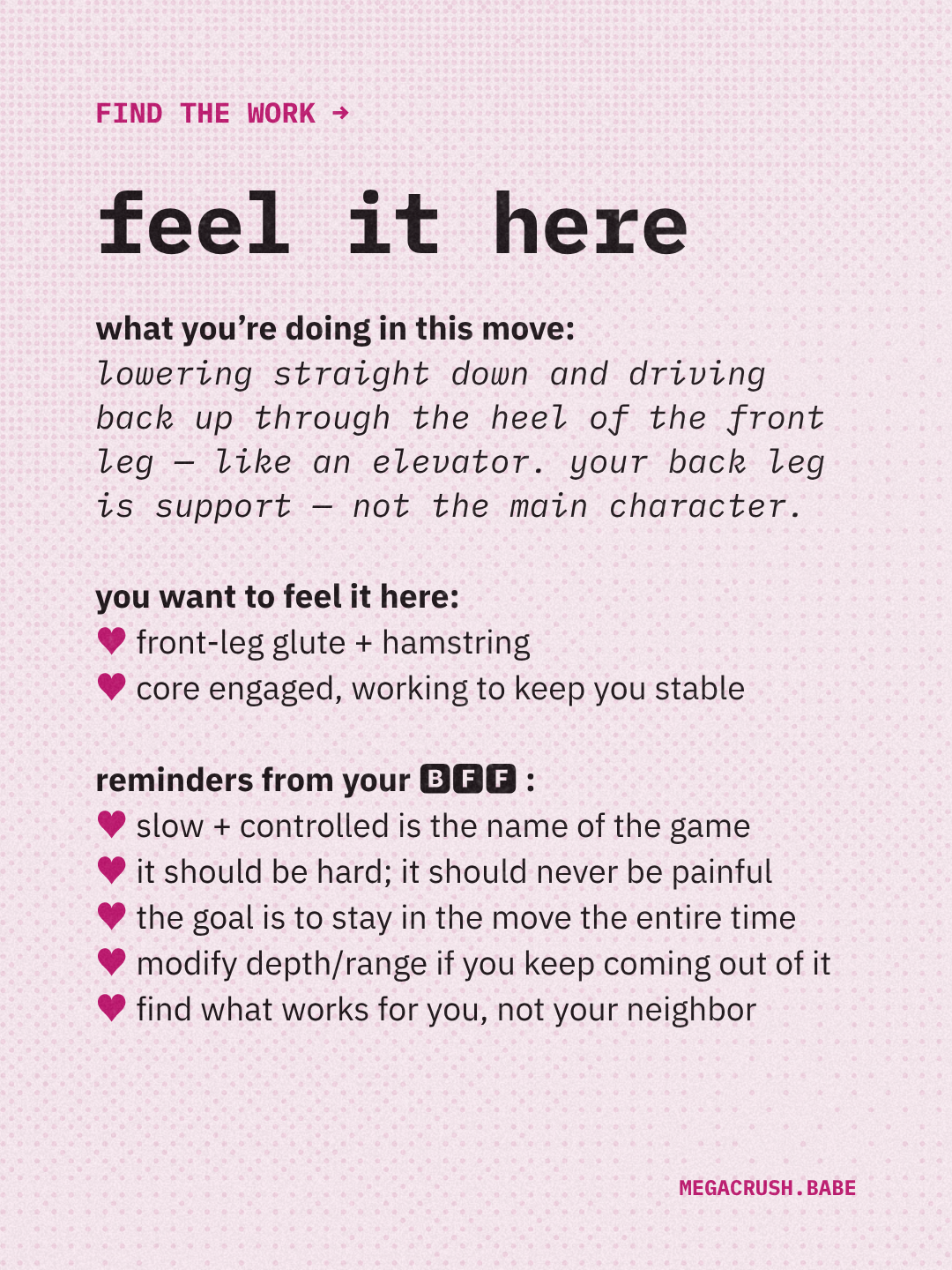
first, where should you feel elevator lunge?
elevator lunge is all about the front leg.
you're lowering straight down and driving back up through the heel of your front leg — like an elevator.
your back leg is support, not the main character.
you want to feel:
front-leg glute + hamstring
core engaged to keep you stable
if you're feeling the work somewhere else, don't panic. we'll get to that.
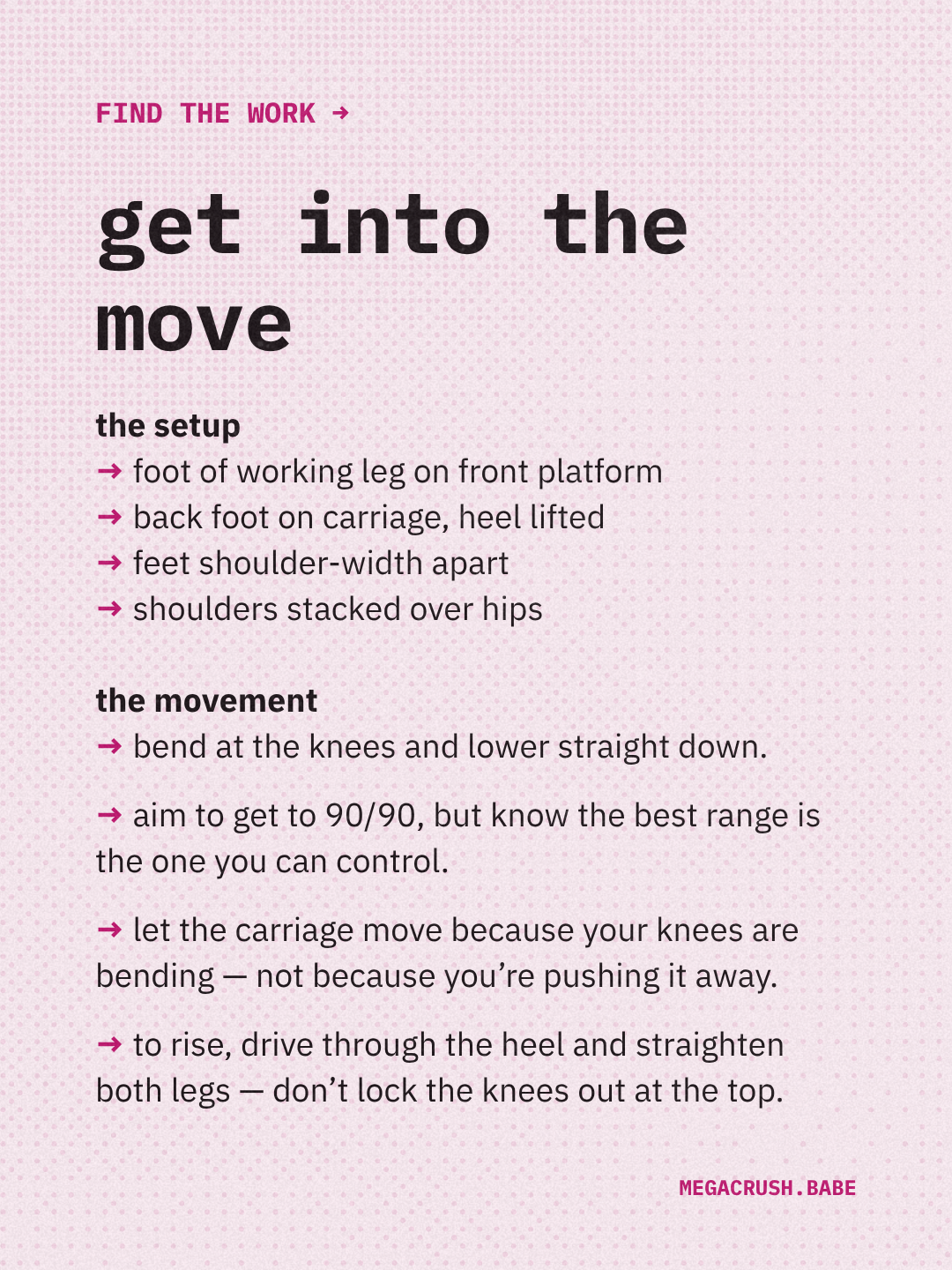
how to set up elevator lunge
for this front-platform variation on light springs:
place your working foot on the front platform.
position your back foot on the carriage with your heel lifted.
keep your feet shoulder-width apart.
stack your shoulders over your hips.
once you're in position, it's time to move.
how to perform elevator lunge
1. lower straight down.
bend both knees, keeping your movement vertical rather than pushing the carriage away.
2. find your range.
aim for a 90/90 position with your knees, but remember: the best range is the one you can control.
you don't need to force yourself into a deeper position if you can't maintain your form.
3. let the carriage follow.
the carriage should move because your knees are bending, not because you're actively pushing it away.
4. drive back up.
press through the heel of your front foot and straighten both legs, without locking your knees at the top.
and then? you get to do it again. slowly. lucky you.
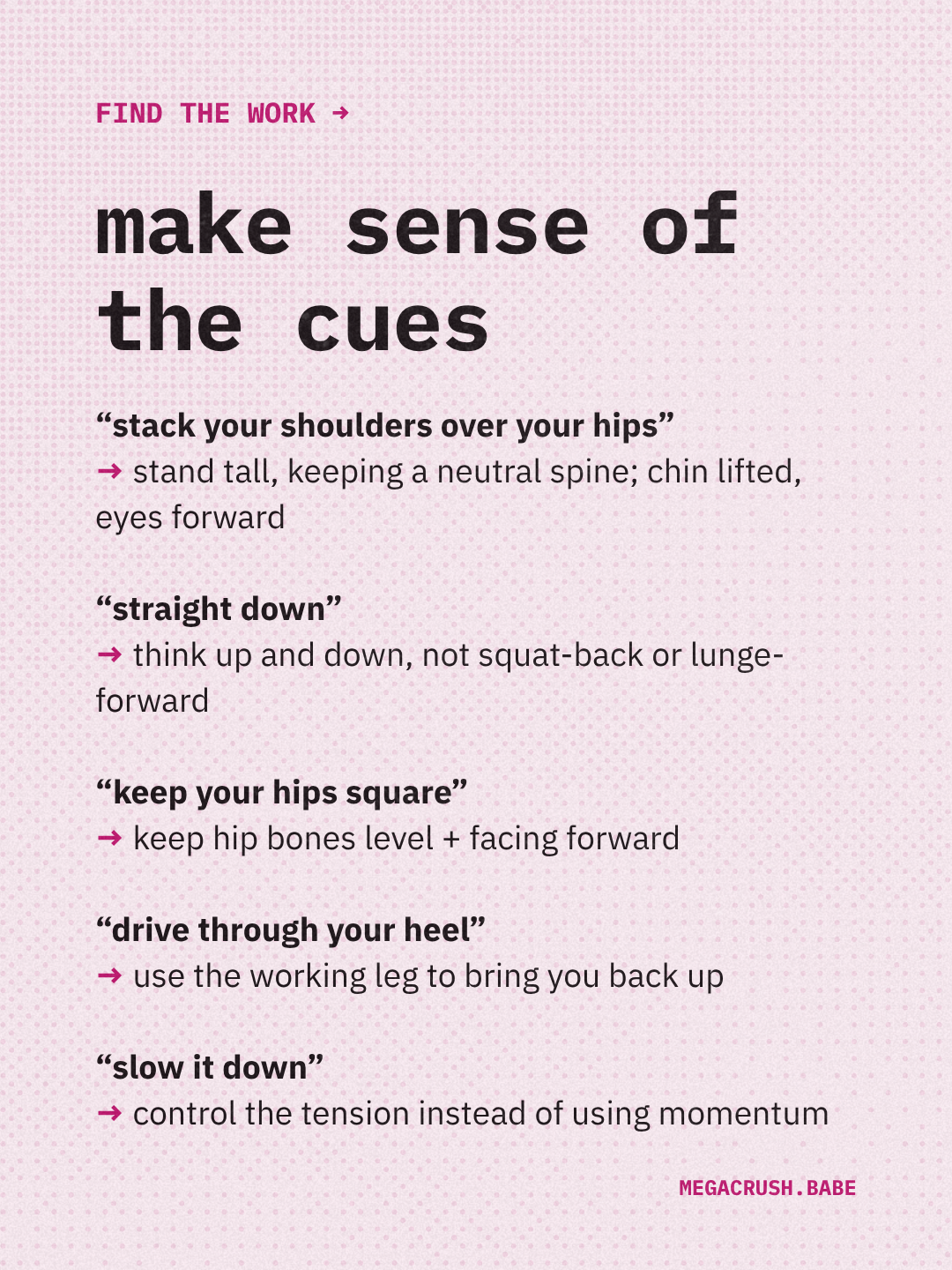
make sense of the cues
lagree instructors have a lot to say, and sometimes you're trying to process approximately seventeen instructions while your legs are actively filing a complaint.
here's what some of the most common elevator lunge cues actually mean.
"stack your shoulders over your hips"
stand tall with a neutral spine, chin lifted, and eyes forward.
"straight down"
think up and down, not squatting backward or lunging forward.
"keep your hips square"
keep your hip bones level and facing forward.
"drive through your heel"
use your working leg to bring yourself back up.
"slow it down"
control the tension instead of using momentum.
something feels off? try this.
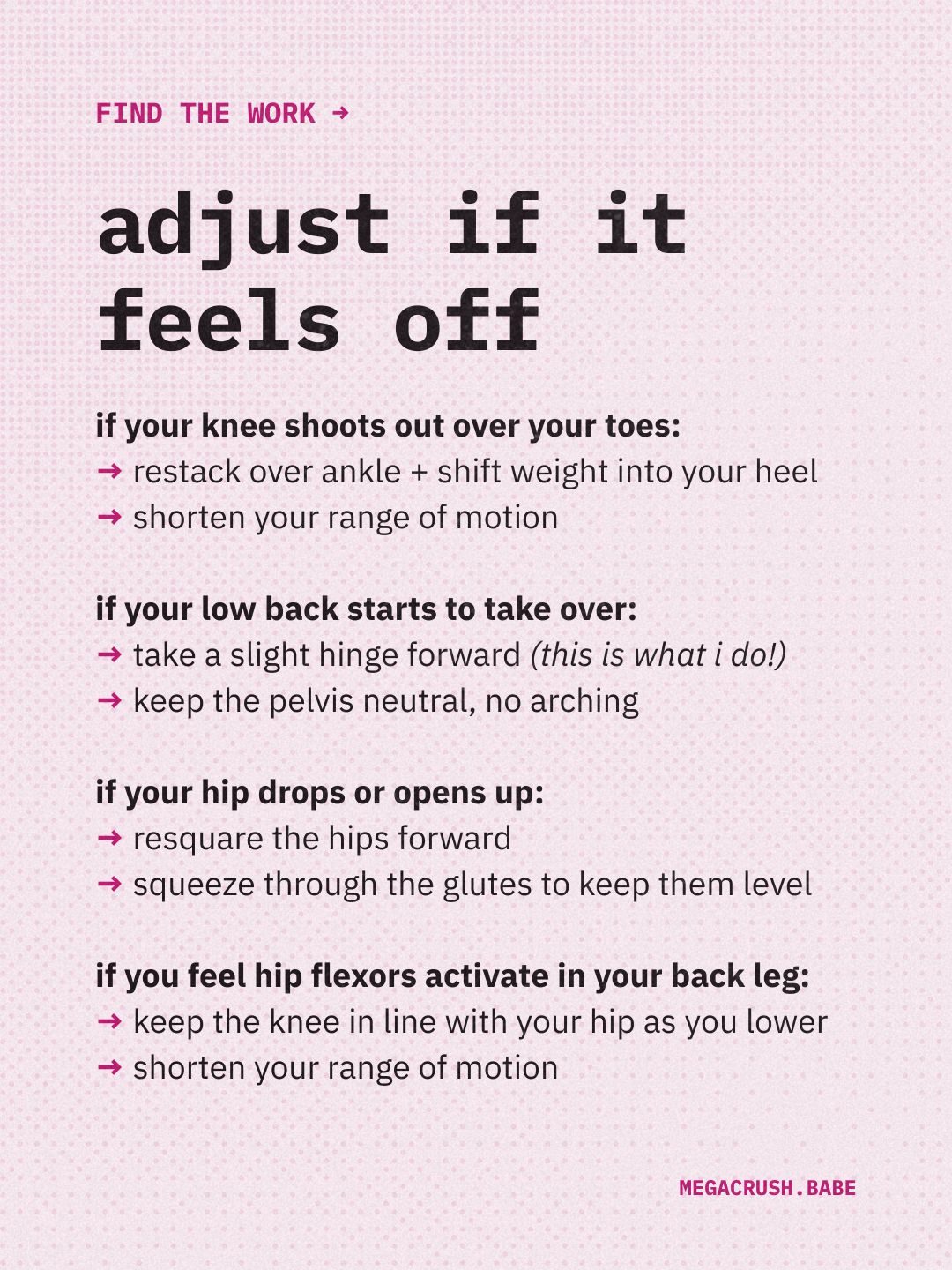
sometimes the work doesn't land where it's supposed to. that doesn't mean you're doing everything wrong. it means it's time to make an adjustment.
if your knee shoots out over your toes
restack your knee over your ankle and shift your weight into your heel.
shorten your range of motion.
if your lower back starts taking over
try a slight hinge forward. (this is what i do!)
keep your pelvis neutral instead of arching your back.
if your hip drops or opens up
resquare your hips forward.
engage your glutes to help keep them level.
if you feel your hip flexors activating in your back leg
keep your knee in line with your hip as you lower.
shorten your range of motion.
the goal is to keep the intended muscles working, not to push through a position that isn't serving you.
work the version you can control
there's no gold star for making a move harder if it means you're no longer finding the work.
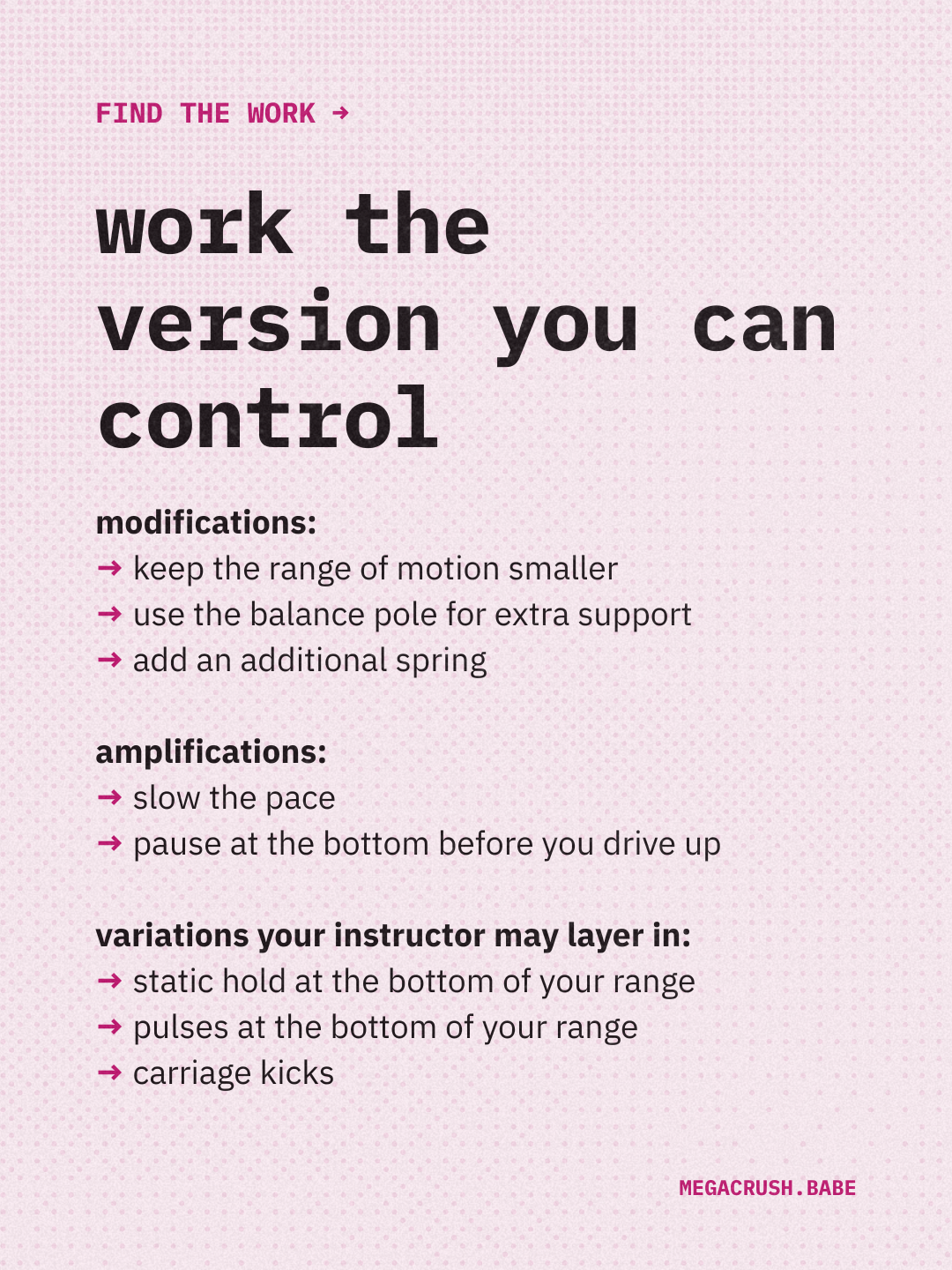
depending on what you need, you can modify, amplify, or try one of the variations your instructor layers into class.
modifications
shorten your range of motion to maintain control.
use the balance pole for extra support.
add an additional spring to adjust the resistance.
amplifications
slow the pace to increase the challenge.
pause at the bottom before driving back up.
variations your instructor may layer in
static hold at the bottom of your range
pulses at the bottom of your range
carriage kicks
remember: the goal isn't to collect every advanced variation like they're limited-edition beanie babies.
it's to find the version that keeps you in the work.
a few reminders from your bff ♡
slow + controlled is the name of the game.
it should be hard, but it should never be painful.
the goal is to stay in the move the entire time. if you keep coming out of it, modify your depth or range.
and perhaps most importantly: find what works for you, not your neighbor.
because the person next to you isn't working with your body, your strength, or your experience.
you are.
now go find the work. ♡